Best Time to Plant Evergreen Trees in the U.S.: Spring vs. Fall (2026 Update)
Evergreen trees hold their needles or leaves all year, adding consistent greenery and privacy to American yards. Homeowners frequently wonder about the best time to plant evergreen trees 2026, particularly as shifting weather patterns influence growth. This term refers to the ideal window for installing these trees so they establish strong roots, survive seasonal stress, and thrive long-term. Proper timing affects their endurance and overall health, making it a critical factor for both conifers and broadleaf varieties. Understanding root establishment, seasonal conditions, and local climates helps gardeners make informed decisions and enjoy healthier landscapes. Make timing easy: a downloadable guide at the end converts climate cues into clear planting windows.
Before diving into the details, watch this expert video to get a quick overview of planting timings across different climates.
Why Timing Matters: Root Establishment and Survival Rates
Choosing the right season for planting determines how well saplings take hold. Roots require space and time to spread before facing air temperatures above 75°F (causing heat stress) or below 35°F (leading to freeze damage), or soil moisture levels below 20% volumetric water content (indicating drought). If planted when soil temperature is below 40°F, root establishment fails in over 50% of cases for trees in USDA zones 3-6; this applies specifically to container-grown evergreens in well-draining loamy soils.
Studies indicate annual mortality tends to be highest during the first five years after planting, with optimal timing reducing losses to 2.5-6.6%. (2019, USDA Forest Service).
“Fall is often considered the best time of year to plant new trees. Generally, late August, September and October are the best months.” — Said by certified arborist from Davey Tree (Wes Rivers, district manager at Davey Tree, with over 20 years in tree care).
Insights from Arborists on Root Growth and Longevity
Ancient trees sustain the entire population of trees’ ability to adapt, with models showing vital contributions to long-term diversity. (2022, The Morton Arboretum). Gardeners in northern regions report fewer losses following these guidelines. Common question: what if frost arrives early? Waiting until soil thaws ensures better anchoring. Using the best time to plant evergreen trees 2026 ensures that root systems expand before harsh weather arrives.
“In our models, these rare, ancient trees prove to be vital to a forest’s long-term adaptive capacity.” — Said by Chuck Cannon, PhD, director of The Morton Arboretum’s Center for Tree Science, leading researcher in tree ecology.
Practical Advice for Boosting Endurance
Before reviewing the specific steps, it’s helpful to understand why these actions are critical. Giving roots space, water, and protection sets the stage for long-term success. Knowing when to plant evergreen trees guides timing decisions for your region.
What steps can be taken to make the roots stronger and healthier?
1. Check local frost dates before planting
It’s crucial to know the first and last frost dates in your area. This tells you when the soil will be workable and when young roots won’t be at risk of freezing. Use local weather resources, extension services, or weather apps to confirm the dates. Planning around these frost dates reduces stress on the tree if planting occurs at least 6-8 weeks before air temperatures drop below 35°F or rise above 75°F, applicable for balled-and-burlapped evergreens in zones 3-7 with soil temperatures above 40°F. This gives it the best chance to establish, achieving root growth of 12-18 inches per year in loamy soils.
2. Dig holes twice the width of the root ball
Don’t just dig a hole the exact size of the root ball—make it twice as wide. This extra space allows roots to spread freely in the first months after planting — most effective in small residential landscaping projects during the early transplant stage. The depth should be slightly shallower or level with the root collar to prevent the trunk from sitting too deep, which can cause rot. Remove rocks, weeds, and compacted clumps so roots can penetrate easily. If the soil is heavy, mix in some compost or organic material to improve drainage.
3. Water thoroughly immediately after installation
Once planted, the tree needs a deep, thorough watering. This ensures water reaches the lowest roots and eliminates air pockets around the root ball, helping the tree settle in — especially useful in commercial landscaping installations during the immediate post-planting phase. Typically, 10–15 gallons of water are needed for a young tree, depending on the size of the root ball. After the initial soak, monitor soil moisture over the first few weeks to keep it evenly moist but not soggy. For guidance on budgeting and expenses, see how much it costs to plant an evergreen tree in 2026.
4. Watch for wilting or yellowing needles during the first months
Keep an eye on your tree, especially during the first few months. Yellowing, drooping, or dropping needles can signal stress from drought, overwatering, or pests. Check regularly, particularly after dry spells or heavy rains. If issues appear, adjust watering, gently loosen soil around the base, and add mulch if needed to retain moisture.
5. Apply a 2–3 inch layer of organic mulch around the base
Mulching helps retain moisture, suppress weeds, and maintain stable soil temperature — particularly beneficial in small backyard projects during the young-tree establishment phase. Use organic materials like wood chips, shredded bark, leaves, or compost. Spread mulch evenly around the base, leaving a 1-inch gap from the trunk to prevent rot. A 2–3 inch layer is ideal—it protects roots and improves soil structure while still allowing air and water to reach the roots.
Following these steps aligns planting with natural cycles, strengthening roots and improving survival chances.
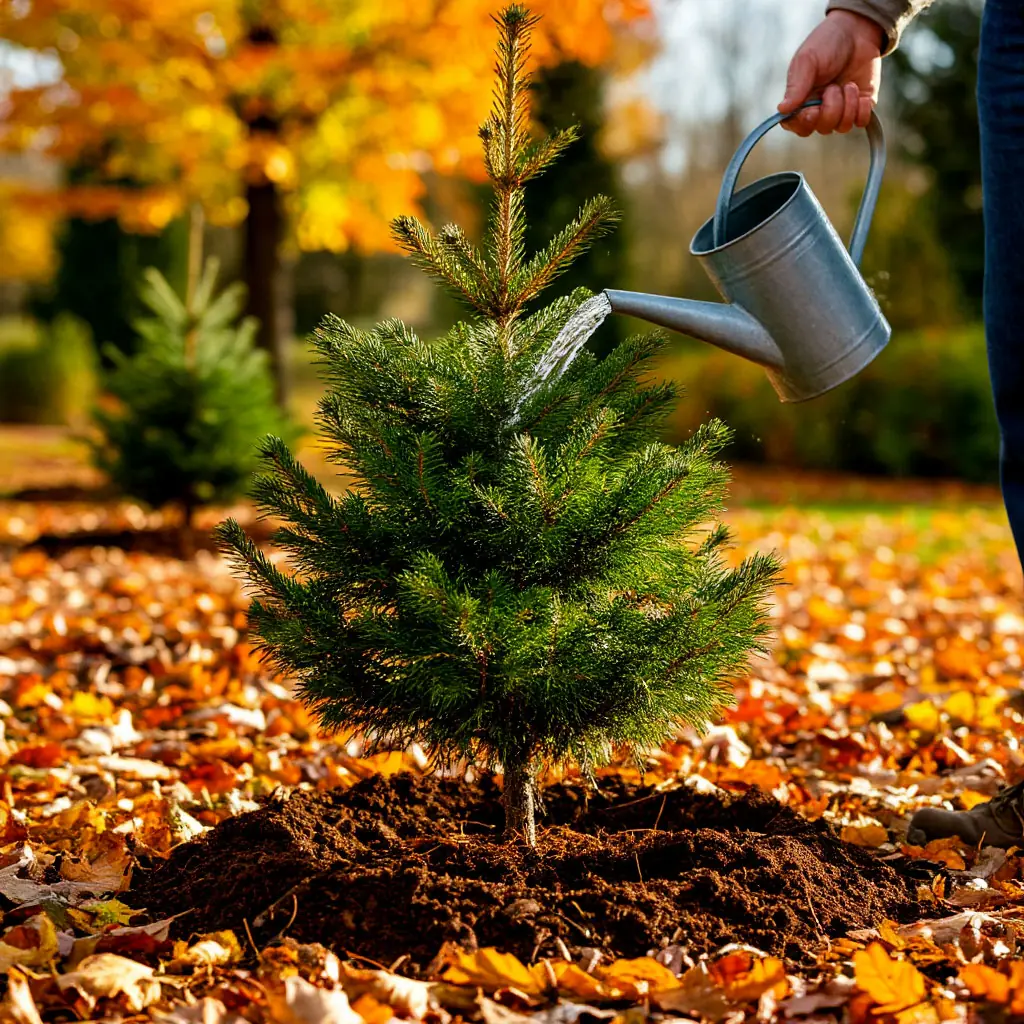
Fall Planting: Benefits, Tips & Best Practices
Autumn provides an excellent window for evergreen installation when air temperatures are between 35-50°F and soil temperatures exceed 40°F, with natural rainfall of at least 1 inch per week supporting root growth; this reduces stress from heat for trees in zones 4-9 — most effective in windbreak or privacy screen projects during the initial establishment stage. Provided wind is below 10 mph and humidity above 50% (applicable to needle-bearing species like pines in non-frozen, workable soils).
Trees concentrate energy underground, promoting robust growth for the coming year. Many landscapers favor fall for its lower risk of dehydration and easier pest control. Spring vs fall tree planting comparisons indicate that autumn consistently supports root development without taxing the top growth.
Expert Views on Autumn Advantages and Success Metrics
Arborists at Davey Tree emphasize late August through October as ideal for most species. Roots expand actively in cooler soils, improving long-term stability. University extension data indicate 85–95 percent survival when planted in fall. Pest activity decreases during this period, minimizing infections. Broadleaf species like holly thrive similarly to needle-bearing evergreens. Homeowners often ask: does fall planting suit all varieties? Most commonly used landscape trees respond well when planted at this time. Using the best time to plant evergreen trees 2026 in fall helps avoid common summer stressors.
Step-by-Step Guidance for Effective Installation
Taking the right steps during installation sets the foundation for healthy growth. By carefully selecting stock, preparing the soil, and ensuring proper watering, homeowners can avoid common mistakes that slow development. These practical measures make establishing a new evergreen less stressful and more effective, giving the tree a strong start for the season.
Autumn planting checklist:
- Select healthy nursery stock with firm, moist roots.
- Remove weeds and loosen soil thoroughly.
- Place the trunk at ground level, backfilling gently.
- Water deeply and mulch to conserve moisture.
- Stake trees in windy areas for stability.
Water with 1-1.5 gallons per inch of trunk caliper (e.g., 2-3 gallons for 2-inch caliper trees) to penetrate 18 inches deep, and apply a 3-inch layer of organic mulch extending to the drip line but leaving a 1-inch gap from the trunk; this conserves moisture in clay or loamy soils during the first year, applicable when soil moisture is below 20% and temperatures are above 40°F. Following this checklist reduces complications and helps trees establish quickly and robustly.
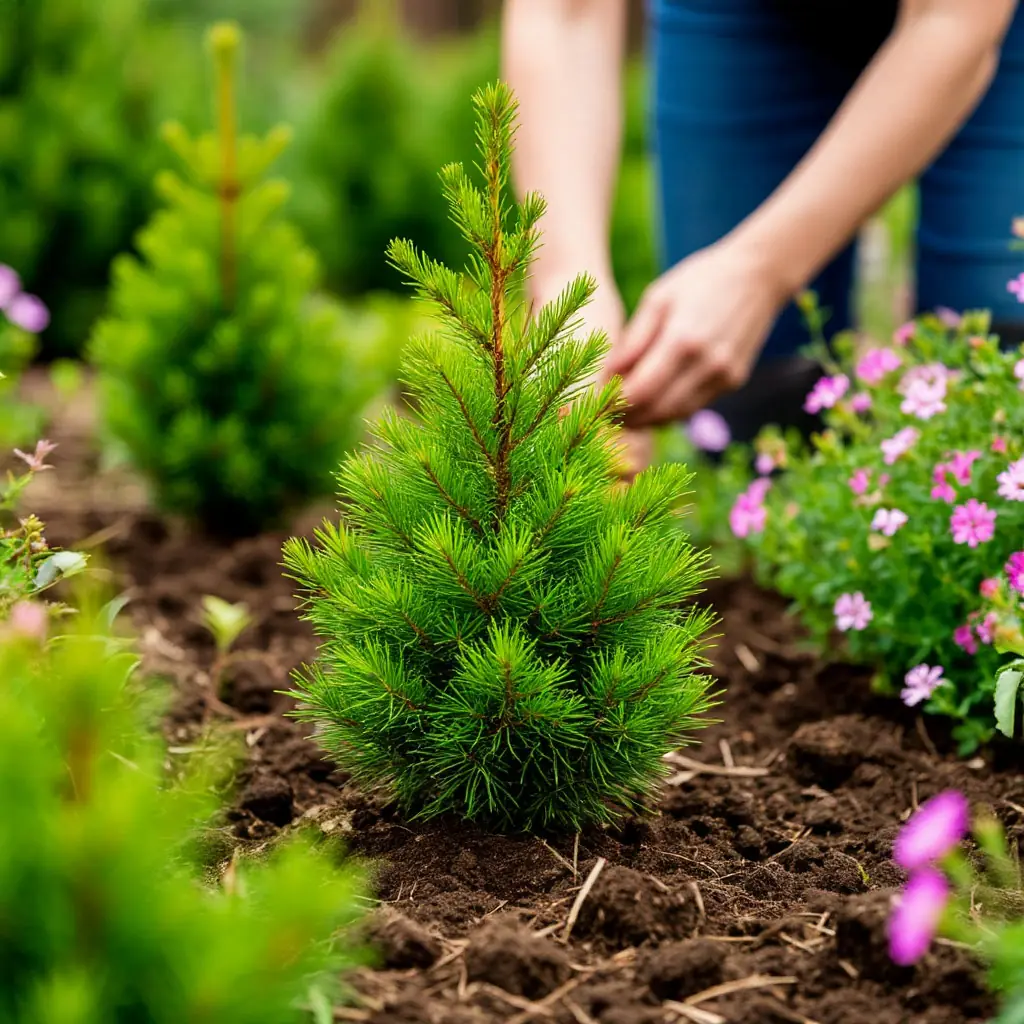
Spring Planting: Advantages, Considerations & Checklist
Early warmer months provide visible growth when air temperatures reach 50-75°F and soil warms to above 40°F, allowing easier monitoring during active growth phases for trees in zones 7-10; monitor bi-weekly if rainfall is less than 1 inch per week or if humidity drops below 50%, applicable to broadleaf evergreens in amended acidic soils (pH 5.5-6.5).
Trees planted in spring may develop tops faster, though roots often grow more slowly initially. Choosing when to plant evergreen trees in spring ensures the soil is workable and water is sufficient for young roots. Comparing spring vs fall tree planting gives homeowners a clear picture of seasonal trade-offs.
Opinions from Specialists on Spring Perks and Factors
Proven Winners experts suggest March through May planting to leverage consistent rainfall. Penn State Extension research shows evergreens like spruce experience vigorous growth, aiding adaptation. For those focusing on conifers like spruce, understanding specific post-planting techniques can prevent common issues and ensure vigorous growth/
Caution is needed in summer, as dryness can stress young trees. A common question: how does spring compare to fall planting? Fall promotes root expansion, while spring encourages above-ground growth, requiring careful watering. Following the best time to plant evergreen trees 2026 in spring can still be highly successful with attentive care.
Detailed Table for Preparation and Execution
Before looking at the table, it’s important to prepare the site carefully. Proper soil testing, hole sizing, and monitoring set the stage for healthy establishment. Understanding optimal planting time evergreens ensures that each step is done at the most favorable moment.
| Aspect | Description | Tips |
|---|---|---|
| Site Prep | Clear debris and test soil pH | Aim for 6.0–7.5; amend acidic soil |
| Hole Size | Twice root width, same depth | Keep root flare visible; avoid deep burying |
| Watering | Deep soak after planting | 10–15 gallons weekly for first month |
| Fertilizing | Light nutrient application | Use slow-release formula; avoid overfertilizing |
| Monitoring | Inspect bi-weekly for pests and disease | Prune damaged or dead areas promptly |
These actions, combined with knowledge of optimal planting time evergreens, provide a strong foundation for spring success.
Regional Climate Considerations by USDA Zone
The U.S. experiences diverse weather, influencing ideal planting times. USDA zones based on average lows help tailor schedules. Northern states have shorter windows, while southern climates allow more flexibility. Adjusting to local patterns ensures better establishment and survival. Understanding evergreen planting season USA helps homeowners anticipate local climate challenges.
Analyses from Authorities on Zone-Specific Strategies
Plant Hardiness Zone Map shows shifts due to warming, with many areas half a zone warmer. (2023, USDA Agricultural Research Service). Northern areas (zones 3–5) benefit from planting in late August to mid-October when soil temperatures are above 40°F to avoid freeze damage below 35°F; southern zones (8–10) can plant from October to March if air temperatures are below 75°F, reducing stress in drought-prone areas where soil moisture exceeds 20% and wind is under 10 mph, applicable for heat-tolerant junipers in sandy soils.
Fast Growing Trees recommends checking last frost dates; for example, zone 6 favors mid-fall. Rising temperatures may shift zone suitability, enabling gardeners to experiment with hardier species. Using the best time to plant evergreen trees 2026 in accordance with local zones ensures better survival.
Zone-Based Recommendations
Understanding the unique weather patterns in each region allows for better planning and higher survival rates. Matching tree species and planting times to local climate conditions makes a real difference in outcomes.
Zone-Based Recommendations:
- Zones 3–4: Late summer to early fall; cold-hardy pines.
- Zones 5–6: September–October; firs for windbreaks.
- Zones 7–8: Mid-fall or early spring; cypresses in humid areas.
- Zones 9–10: Outside peak heat; drought-resistant junipers.
- Zones 11–13: Avoid midsummer; select heat-tolerant broadleaves.
In regions prone to dry spells, tailored drought strategies are essential to maintain tree health during establishment. Adapting to local zones improves survival and helps gardeners choose the right species for each environment.
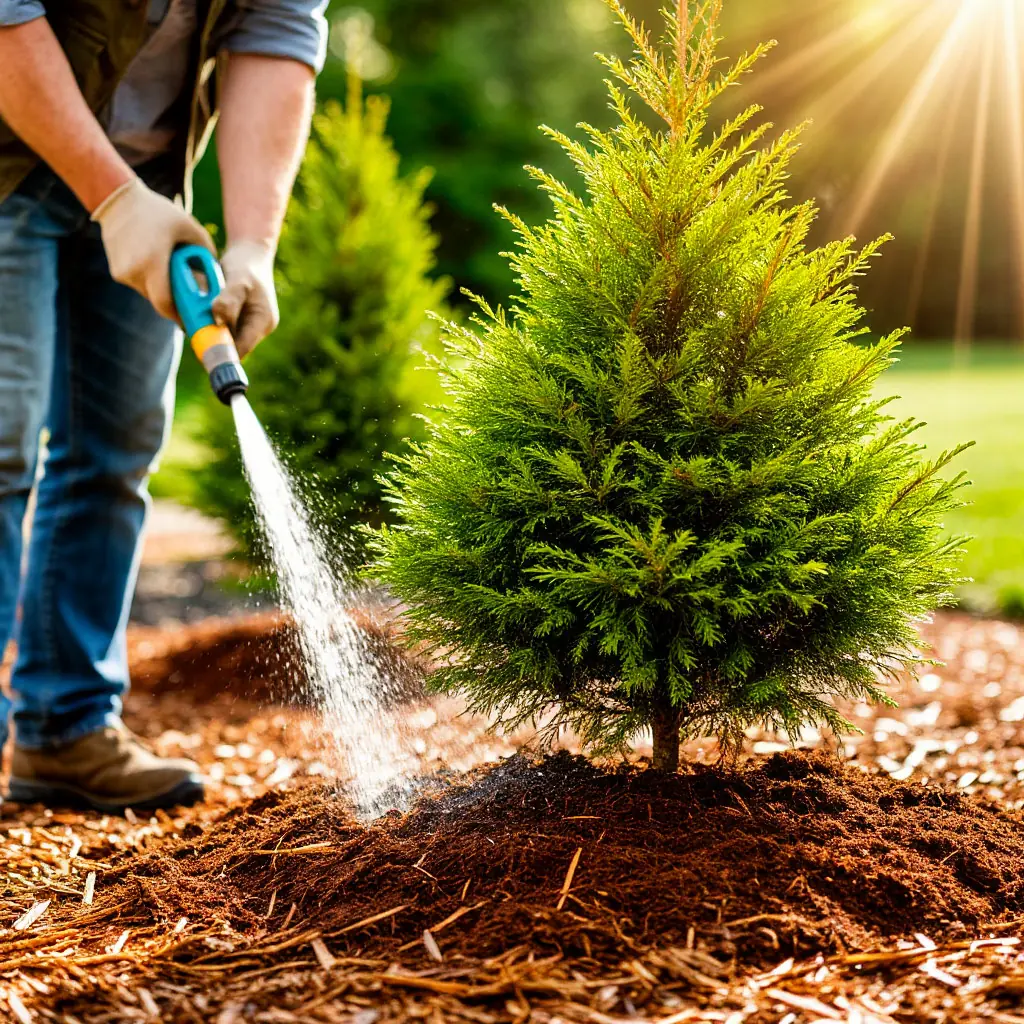
Seasonal Tree Care After Planting: Watering, Mulching, and Monitoring
Ongoing care is vital for young evergreens. Proper hydration, mulch, and regular checks reduce stress from heat, cold, and pests. Following a consistent routine promotes resilience and healthy development. Knowing when to plant evergreen trees informs watering schedules and seasonal adjustments. After planting, follow this checklist for pine tree care after planting to lock in survival.
Professional Advice on Maintenance Techniques and Observations
The University of Minnesota Extension recommends, “Provide deep weekly watering for the first year—about 1 to 1.5 gallons per inch of trunk length.”
Mulch layers of 3 inches retain moisture and suppress weeds, following Morton Arboretum recommendations. Monitoring for yellowing needles or insect activity prevents major problems. Common concern: how much to water in winter? Reduce frequency but maintain soil moisture during dry spells. Observing the evergreen planting season USA ensures timing aligns with care needs.
In-Depth Instructions for Routine Upkeep
Before diving into the step-by-step routine, it’s important to understand why consistent care matters. Young evergreens respond well to structured attention, and small adjustments in watering, mulching, and monitoring can prevent stress before it starts. Setting up a simple schedule ensures these trees stay healthy through seasonal changes. Following the best time to plant evergreen trees 2026 helps maximize the impact of these routines.
- Water thoroughly after planting, ensuring even soil penetration.
- Spread bark chips or leaves around the base, keeping mulch off stems.
- Inspect weekly for pests or disease; use organic sprays if needed.
- Adjust watering based on rainfall—less in wet periods, more during droughts.
- Prune lightly to maintain shape and remove dead sections.
Consistent care supports robust growth and long-term health.
FAQ
How does the best time to plant evergreen trees 2026 vary by location?
The ideal time depends on frost patterns and USDA zones. In northern regions (zones 3-6), planting from late August to mid-October allows roots to establish (requiring at least 6-8 weeks) before soil temperatures drop below 40°F and ground freezes; this applies when humidity is above 50% and for container-grown trees in loamy soils with drainage rates of 1-2 inches per hour. Southern gardeners have more flexibility, but cooler months still reduce stress and improve survival. Checking regional extension recommendations and local climate trends helps select the most effective planting window.
Why choose spring vs fall tree planting for conifers?
Fall planting directs energy toward root growth, creating a strong foundation for the tree. Spring planting promotes faster shoot and branch development, giving quicker visible growth, but requires careful watering and monitoring to avoid heat stress. Considering local weather and soil conditions helps decide which season will provide the best long-term results.
What makes optimal planting time evergreens crucial?
Planting at the correct season ensures roots develop efficiently before facing environmental stressors such as frost, drought, or pests. Proper timing reduces first-year losses and supports overall tree health. Paying attention to seasonal cues gives trees the best chance for strong establishment and long-term vigor.
When to plant evergreen trees in northern states?
Late summer to mid-autumn is typically the most effective period, giving roots time to grow before winter. Preparing the planting site in advance and monitoring soil moisture are key steps. Being mindful of frost dates helps prevent issues with anchoring and stability during cold weather.
How does evergreen planting season USA affect care needs?
Cooler planting periods reduce stress on young trees, which can lower the need for intensive watering and monitoring. Aligning planting with seasonal cycles helps ensure steady growth, minimizes potential problems, and provides a smoother path to tree maturity.
When to plant evergreen trees for best establishment?
Trees should be planted when the soil is workable and conditions support root growth. Proper site preparation, mulching, and regular watering improve survival rates. Paying attention to your region’s climate patterns maximizes the chances that the tree will establish quickly and thrive throughout the year.
In conclusion, determining the best time to plant evergreen trees 2026 involves balancing seasonal advantages, local climate, and proper care. Fall offers root development and reduced stress, while spring supports visible growth and active monitoring. Selecting a healthy sapling, preparing the site carefully, and following routine watering and mulching ensures a thriving addition to any yard.

Consult local extension services for precise guidance tailored to your region. Starting at the right moment guarantees year-round beauty and a lasting, vibrant landscape. Choose the week with confidence—download the checklist and align care for the first 30 days.
Sources
- USDA Forest Service Urban Tree Mortality Review (2019, USDA Forest Service).
- Ancient Trees Vital to Forest Survival (2022, The Morton Arboretum).
- When Is The Best Time Of Year To Plant Trees? (2021, Davey Tree Expert Company).
- Arboriculture & Urban Forestry Journal Urban Tree Mortality (2019, International Society of Arboriculture).
- Evergreen Shrubs and Trees for Pennsylvania (2006, Penn State Extension).
- USDA Plant Hardiness Zone Map (2023, USDA Agricultural Research Service).
- Watering Newly Planted Trees and Shrubs (2023, University of Minnesota Extension).
- How to Mulch Trees and Shrubs (2023, The Morton Arboretum).
- Cost to Plant Tree (2026, LawnStarter).