Winterizing Your Pine Trees in Northern US: What to Do Before First Snow (2026 Update)
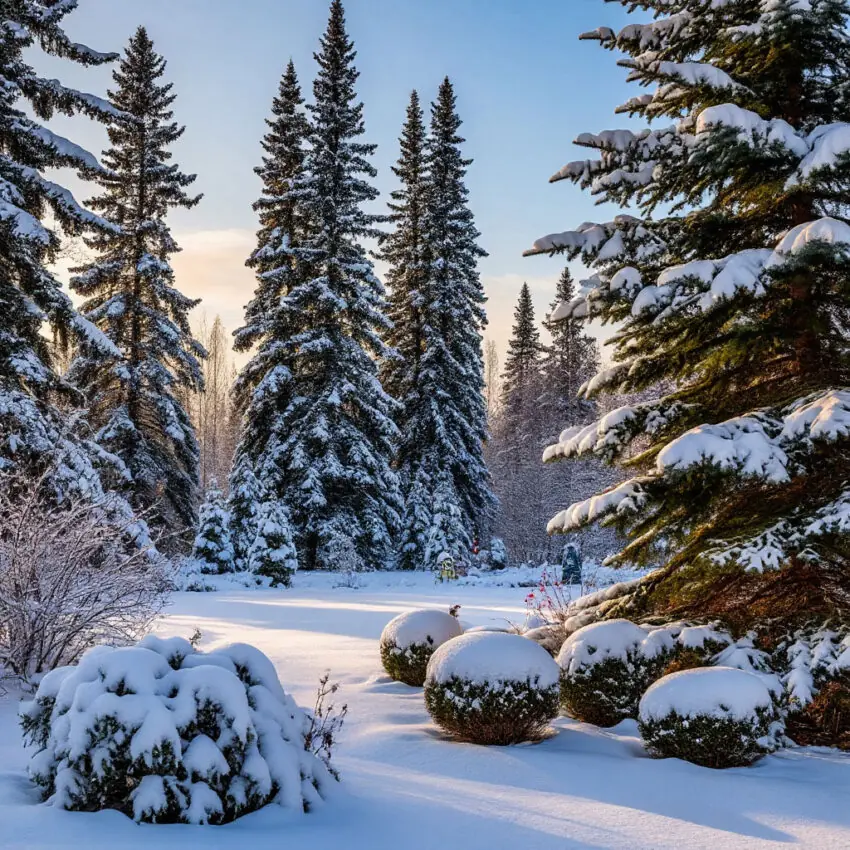
Pine trees, those sturdy evergreens dotting yards from Minnesota to Maine, often suffer without proper preparation. Winterizing pine trees means taking deliberate steps to shield these plants from freezing temperatures, heavy snowfall, and drying winds before the ground hardens. This practice keeps roots insulated, branches intact, and needles green come spring. Experts stress the importance now more than ever, with erratic weather patterns hitting harder in recent years.
Winter preparation involves inspecting trees, managing soil and moisture, protecting branches, and safeguarding roots. Proper pine tree winter care ensures pines remain healthy through the harsh months and emerge ready for spring growth. Before you winterize, review the essentials of pine tree care after planting—watering rhythm, first-year fertilizing, and mulch depth set your trees up for a stress-free freeze.
“Keeping plants adequately watered throughout the fall and placing a protective barrier of burlap over or around plants to protect them from winter winds and sun will help to reduce the incidence of winter injury.” — UMass Amherst Extension (Center for Agriculture, Food, and the Environment), 2025–2026 update.
Finish this article with a one-page winter playbook: mulch depths, timing, and what to do before a hard freeze. We suggest you download the checklist for free so you always have it at hand.
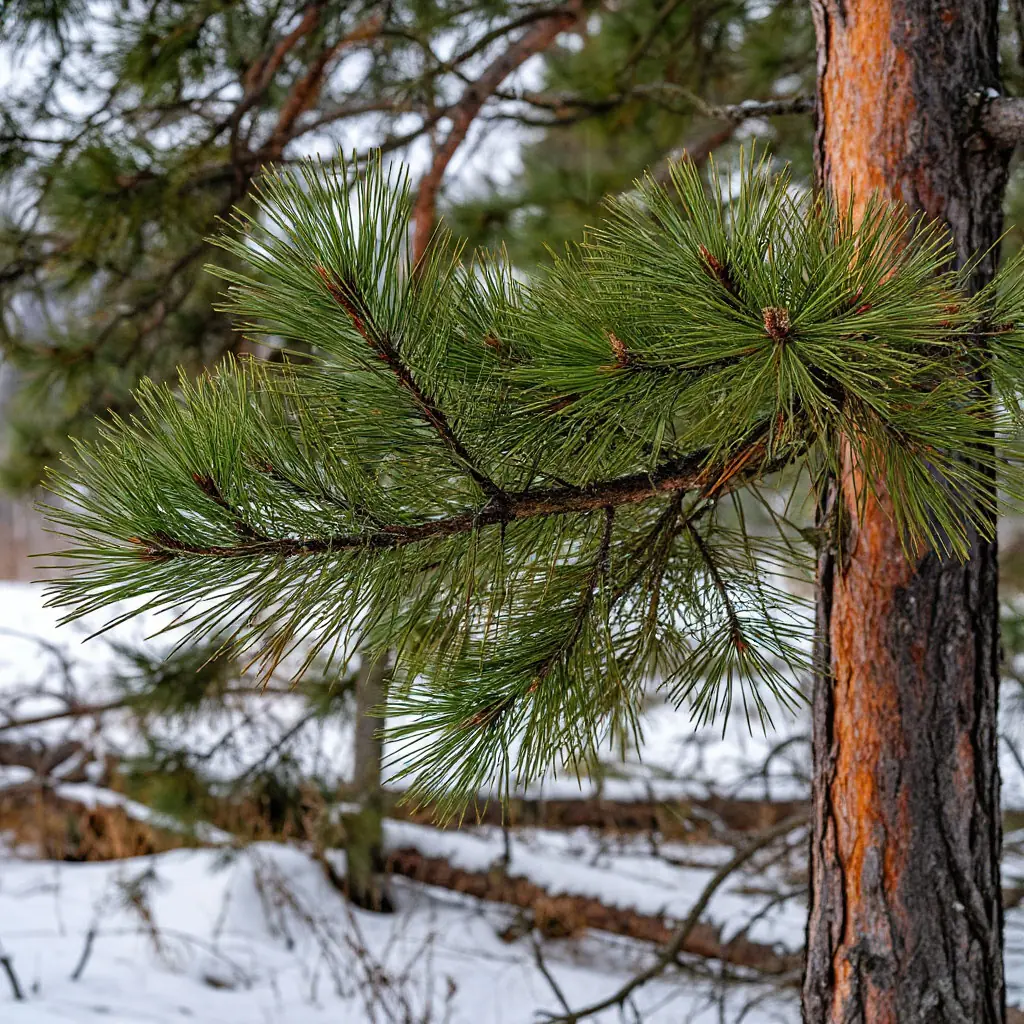
Why Pine Trees Need Extra Care in Northern Winters
Conifers in northern regions face unique threats that require attention. Freezing cycles crack bark, gusts strip moisture from foliage, and heavy snow bends limbs, risking breaks that invite pests. Dehydration is a serious problem when soil freezes, preventing roots from absorbing water. These challenges are most pronounced in areas like Michigan and Wisconsin, where temperatures can drop below zero for weeks at a time.
Understanding Winter Stressors
Harsh winter conditions strip away natural defenses in evergreens. Sun scald burns exposed bark during thaw periods, browning needles irreversibly. Rodents gnaw trunks under snow drifts, girdling vital tissue. Salt from nearby roads seeps into soil, affecting root systems. A recent analysis by University of Minnesota Extension highlights that proper mulching and wind protection can significantly reduce winter injury in young conifers, with mulch moderating freeze-thaw cycles by up to threefold compared to bare soil (Michigan State University Extension, 2026). Winds exceeding 20 mph accelerate moisture loss from needles, leaving trees stressed despite otherwise damp conditions.
Many homeowners wonder why needles yellow mid-winter. Root stress is often the culprit: frozen soil prevents proper hydration. Branches can snap under ice weight if unprotected, and pests such as bark beetles exploit weakened areas. Early recognition of these threats is crucial for pine tree winter care.
Practical tip: mark vulnerable branches with colored ties to monitor stress points. This visual cue helps prioritize protective measures before heavy snow or ice events.
Expert Insights on Vulnerability
Professionals from the Arbor Day Foundation explain that conifers adapt poorly to sudden temperature drops without human assistance. Mature trees tend to cope better, but saplings need extra protection. Davey tree care specialists caution against assuming hardiness; even native varieties may struggle in urban settings.
Michael Sundberg from Davey highlights the importance of deep root zones for winter survival, especially with the erratic freeze-thaw cycles seen in 2026.
Different pine species face varied risks. White pines are particularly vulnerable to winter burn, while Scots pines tolerate snow better but dry out faster. For guidance on selecting the most resilient types for your yard, see our article on disease-resistant pine varieties.
Ross Tree Company in Denver emphasizes mulching as a key insulation method. Monitoring weather forecasts and acting before soil freezes can save numerous trees annually. Understanding these vulnerabilities equips gardeners to protect pine trees in snow, ensuring healthy landscapes year-round.
Extra advice: For urban yards, consider planting windbreak shrubs to reduce exposure on young saplings. Even a temporary burlap screen can cut wind stress by 30–40%. This is part of comprehensive winterizing pine trees efforts.
Preparing Your Pine Trees Before First Snow
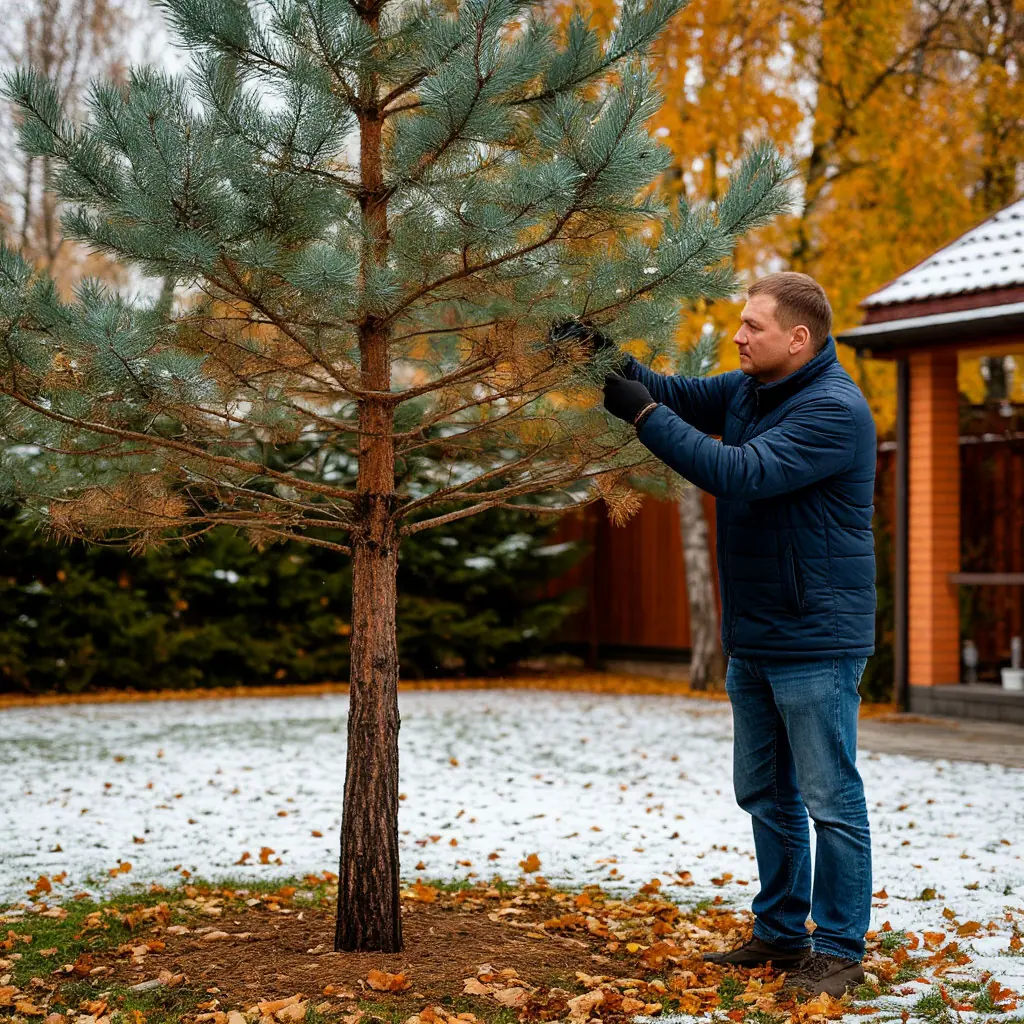
Preparing conifers for winter involves timely and methodical steps to enhance resilience. Begin by inspecting trees in late fall, pruning only dead or diseased branches. Constraint: Avoid cutting live branches (even weak ones) in late fall, as open wounds deplete sap and can lead to severe dieback during deep freezes; save structural pruning for late winter dormancy.
Regarding nutrients: stop nitrogen applications completely after August. Only young saplings (<3 years) showing confirmed deficiencies should receive amendments, and strictly before the ground freezes. Clear debris around tree bases to deter rodents. These steps form a foundational evergreen winter survival guide for northern homeowners.
Timing Your Prep Work
Schedule preparation when leaves have dropped but before snowfall begins. In northern regions such as New York or Illinois, October is typically ideal. Checking local frost dates and forecasts is critical, as shifts in weather patterns can affect timing. A 2026 report from Beautiful Trees Inc. notes that some areas experience earlier freezes than in previous years, emphasizing the importance of early preparation.
Preparation differs for young versus mature trees. Saplings have developing root systems and require closer attention. Mature trees benefit from periodic refreshers every few years. Adjust tasks based on tree age and condition for efficiency and effectiveness.
Local extension services, such as Oklahoma State University, recommend starting with a comprehensive health check. Remove broken limbs cleanly to prevent disease entry points and follow up with protective barriers against animals.
Practical tip: Create a seasonal checklist with dates for pruning, soil testing, fertilizing, and barrier setup. This ensures nothing is overlooked and helps track annual progress. It’s a key step in pine tree winter care routines.
Step-by-Step Preparation Guide
Homeowners can strengthen their trees by following these steps:
- Inspect for damage. Walk around each trunk and examine branches for cracks, pests, or weak spots. Trim affected areas with sharp, sanitized tools. Check for early signs of mold or insect activity.
- Soil testing. Collect samples from the root zone and send them to labs for nutrient analysis. Amend soil with organic matter as needed. Record results yearly to track soil health trends.
- Pruning basics. Remove crossed or overcrowded branches. Shape trees lightly for balance, avoiding heavy cuts that stress the plant. Focus on interior limbs where snow accumulation can cause bending.
- Barrier setup. Install fencing or hardware cloth around the base to keep rabbits and other rodents away. For larger properties, temporary netting or mesh can cover multiple saplings at once.
Incorporating these measures into a seasonal routine is essential for winterizing pine trees success. Bypass pruners are preferred for clean cuts, and large wounds may require sealing in certain species. For areas exposed to strong winds, additional windbreaks such as tarps or fences can redirect gusts and reduce stress on trees.
Extra practical advice: Consider anti-desiccant sprays for green-needled varieties (like Yews or Hemlocks) if temperatures are above 40°F. Warning: Do not use these sprays on Blue Spruce (Picea pungens), as the coating damages the natural waxy bloom that gives the tree its blue color.
Seeing these protection methods applied in real time can help you avoid common pitfalls. Watch this quick tutorial on wrapping and shielding evergreens to get the techniques just right:
Best Mulching and Wrapping Techniques
Insulating roots and protecting bark are critical for protecting pine trees in snow. Materials like bark chips, wood shreds, and burlap are widely used. Applying them properly avoids rot, suffocation, or fungal growth. Techniques have evolved in 2026 with better products available, and gardeners across the USA swear by them for longevity.
Choosing the Right Materials
Organic mulches that decompose slowly, such as wood chips or pine straw, retain heat and moisture effectively. Straw can also work but may attract rodents. Plastic mulches are discouraged as they trap water and can harm roots. Experts recommend avoiding dyed products that may leach chemicals.
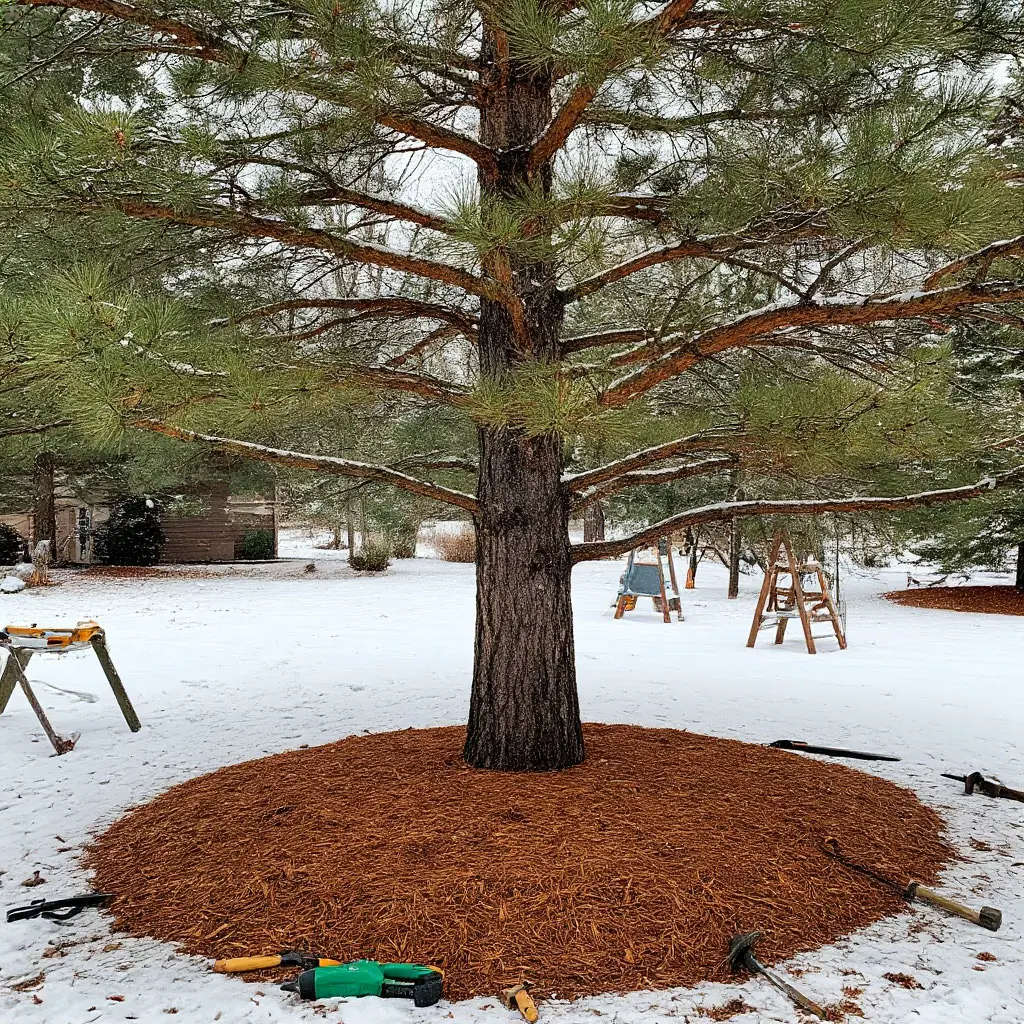
Eco-friendly alternatives include shredded leaves or compost blends, which gradually add nutrients and can be sourced locally. A depth of 2–3 inches is ideal, but ensure the “root flare” (where the trunk widens into roots) remains visible and dry. If your soil is heavy clay, limit depth to 2 inches to avoid creating a moisture trap that freezes into an “ice collar”. There must be a 3–6 inch mulch-free ring immediately touching the trunk.Annual refreshes ensure consistent protection.
Expert tip: Ross Tree Company recommends checking mulch thickness after heavy rain or snow melt to prevent soggy conditions that encourage fungal growth.
Application Methods Compared
| Technique | Materials Needed | Pros | Cons | Best For |
| Mulching | Wood chips, pine straw | Insulates roots, retains water | Can attract pests if wet | All ages, especially young |
| Burlap Wrapping | Burlap fabric, stakes | Blocks wind, sun | Labor-intensive, needs removal | Exposed trunks, saplings |
| Anti-Desiccant Spray | Spray bottles, product | Seals moisture in needles | Temporary, reapply needed | Broadleaf evergreens, windy spots |
| Snow Fencing | Plastic mesh, posts | Catches drifts for natural cover | Visual impact on yard | Large areas, northern exposures |
| Tree Guards | Plastic tubes, wire | Protects from animals, salt | May girdle if left on | Urban settings, roadside plants |
Detailed Instructions for Mulching and Wrapping
Clear weeds before spreading mulch evenly around the root zone in a 3-foot radius, keeping it a few inches away from the trunk. Water lightly to settle the material. For wrapping, construct a wind barrier around the tree rather than draping fabric directly on it. Fully wrapping foliage is generally reserved for vulnerable saplings or recent transplants (<2 years).
For established trees, direct contact can trap moisture and promote needle mold. Instead, install a burlap screen on the prevailing wind side (usually North/West) to cut wind stress without physical contact. Reuse materials like Christmas greenery to add extra insulation when possible. Avoid excessive layers that could suffocate roots.
Extra practical tip: Use stakes to create a small tent over branches for young pines in open yards. This prevents snow accumulation from bending limbs. Proper mulching and wrapping are essential for winterizing pine trees effectively.
Watering Pines in Cold Weather: Do’s and Don’ts
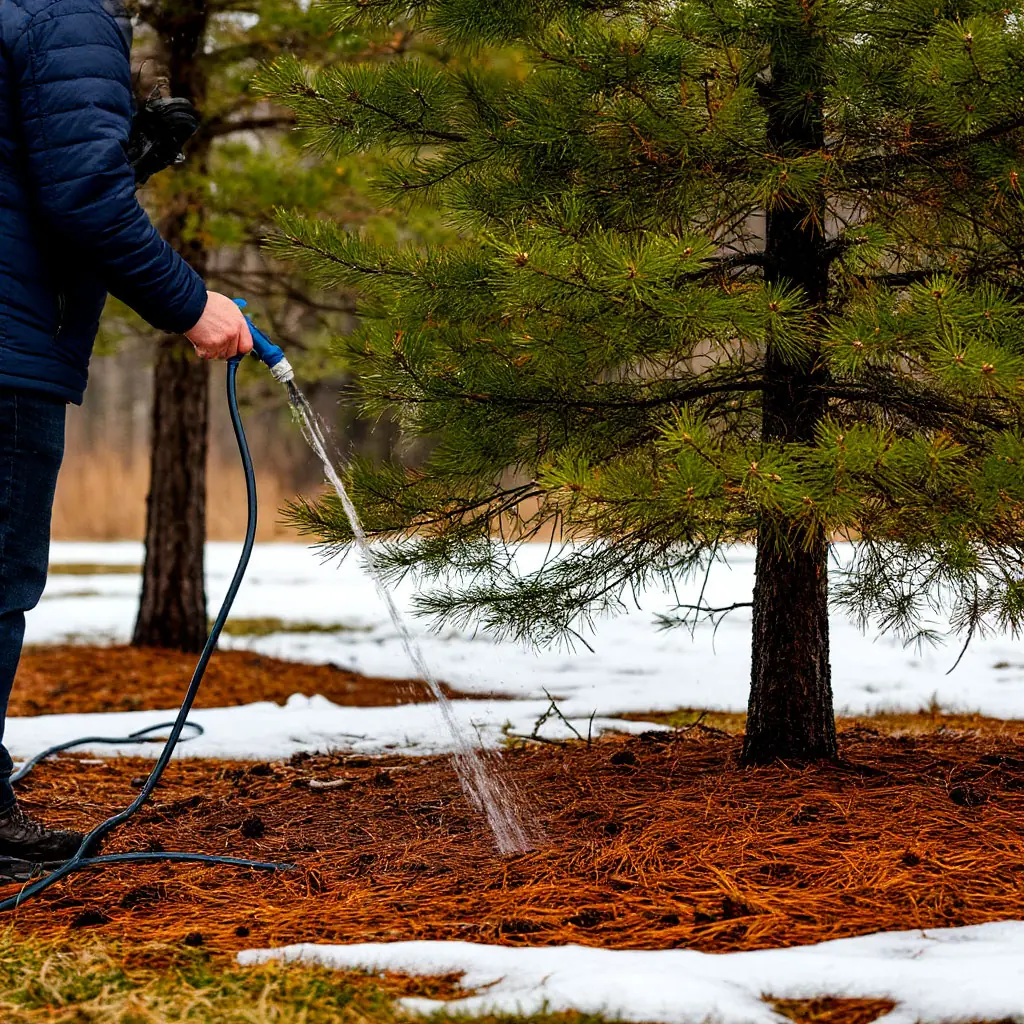
Hydration is critical for conifer health during winter. Roots absorb less water when frozen, but deep autumn soaks help trees survive dry, cold months. Overwatering encourages rot, while under-watering causes desiccation, browning needles, and weakened branches.
Hydration Needs Explained
Pine trees draw water year-round, even when dormant. Dry spells before freeze-up can deplete reserves, while wind accelerates moisture loss from needles. Minnesota DNR research recommends weekly soil checks, aiming for about 1 inch of penetration to sustain roots.
Homeowners often ask how to adjust watering schedules for variable climates. Hydrate roots thoroughly until the first hard frost, then stop. Watering during brief mid-winter thaws is risky; only do so if the thaw is forecasted to last 48+ hours to allow proper drainage before refreezing. Container-grown pines freeze faster and may need carefully timed water during thaws as they lack ground insulation.
Expert insight: Arbor Day Foundation advises slow drip or soaker hoses at the base to maximize absorption. Shallow watering can stress saplings as much as drought.
Essential Do’s and Don’ts:
- Do water deeply in autumn. Every 7–10 days if rainfall is insufficient, using slow drip or soaker hoses.
- Do monitor soil moisture. Test with fingers or a probe; hydrate if dry beyond 2 inches.
- Do use mulch to retain moisture. Mulch reduces evaporation and insulates roots.
- Do protect young trees. Saplings require more frequent attention.
- Don’t water frozen ground. Moisture will run off or freeze, harming roots.
- Don’t over-saturate. Excess water encourages fungal diseases.
- Don’t ignore extreme wind exposure. Direct gusts dry needles despite soil moisture.
Extra practical tip: Create small basins around trees in areas with heavy snow. Thawed runoff collects there, helping roots absorb more water. Consistent hydration is a cornerstone of winterizing pine trees.
Common Mistakes to Avoid in Pine Winter Care
Even minor oversights can damage conifers in northern winters. Ignoring pruning increases branch breakage, piling mulch too high causes decay, and skipping inspections lets pests proliferate. Awareness is essential in protecting pine trees in snow and maintaining cold climate landscaping USA.
Identifying Frequent Errors
- Late fertilization spurs tender shoots vulnerable to frost.
- Using plastic wraps incorrectly traps heat or moisture.
- Ignoring snow accumulation leads to broken branches.
- Improper pruning leaves exposed wood, slowing healing.
University of Wisconsin Horticulture experts note that winter burn remains one of the most common issues for exposed evergreens, often leading to significant needle loss and branch dieback if unprotected (Wisconsin Horticulture, 2024–2026).
Prevention Strategies
- Conduct monthly inspections for early issues.
- Trim weak or broken limbs carefully.
- Apply mulch at proper depth and distance from trunk.
- Install barriers to keep rodents away.
- Maintain correct watering schedules.
Practical tips for homeowners:
- Mark branches that frequently snap with colored ties to monitor stress points.
- Shake snow gently from branches after storms to prevent splitting.
- Use anti-desiccant sprays on saplings to reduce needle moisture loss.
Professional insight: A Plus Tree recommends consulting arborists for subtle stress signs. Experts can suggest pruning strategies, mulching depth, and wrapping techniques customized for your region.
Following these practices enhances vitality, helps trees endure harsh winters, and ensures landscapes remain vibrant and appealing.
FAQ
How does winterizing pine trees differ for various species?
White pines need more wind protection, while spruces tolerate snow but can dry quickly. Adjust wrapping and mulching accordingly.
Why do pines turn brown in winter despite care?
Desiccation caused by sun, wind, or frozen soil is common. Applying anti-desiccants early and maintaining hydration prevents browning.
What’s better: Burlap or plastic for wrapping?
Burlap breathes, reducing mold, while plastic works only for short-term protection. Avoid leaving plastic on for prolonged periods.
How often should mulch be checked in snowy weather?
Check monthly and replenish after thaw cycles. Maintain 2–4 inch depth for insulation.
Why avoid watering mid-winter?
Frozen soil prevents root absorption. Excess water may freeze, damaging roots.
How do you prevent rodents from damaging pines?
Install hardware cloth, fencing, or tree guards. Remove excess mulch and debris to discourage nesting.
Can professional help improve survival rates?
Yes. Arborists detect subtle stress signs and suggest optimal mulch, pruning, and wrapping strategies tailored to local climate.
Safeguarding conifers through winterizing pine trees offers long-term benefits. Preparation, mulching, wrapping, proper watering, and avoiding common mistakes ensure trees thrive through northern US winters. Homeowners gain peace of mind knowing landscapes remain healthy and attractive. Begin these actions before the first snow, monitor trees consistently, and consult local experts for tailored advice. Following these steps creates a durable evergreen winter survival guide for yards, allowing pine trees to withstand frost, snow, and wind while maintaining year-round beauty. For a fast, reliable routine, print the checklist and keep it in the garage—your step sequence for every cold snap.

Sources
- University of Minnesota Extension / Michigan State University Extension (2026). Organic mulching for weed control and mitigating cold stress in Christmas tree production.
- UMass Amherst Center for Agriculture, Food, and the Environment (2025–2026). Protecting Evergreens in the Winter Q&A.
- University of Wisconsin Horticulture (2024). Winter Burn.
- University of Minnesota Extension (2026). Protecting trees and shrubs in winter.