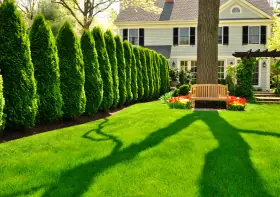
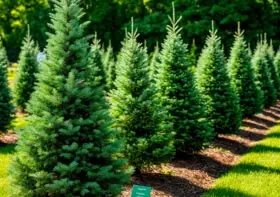
Complete Guide: Evergreen Trees for Shade
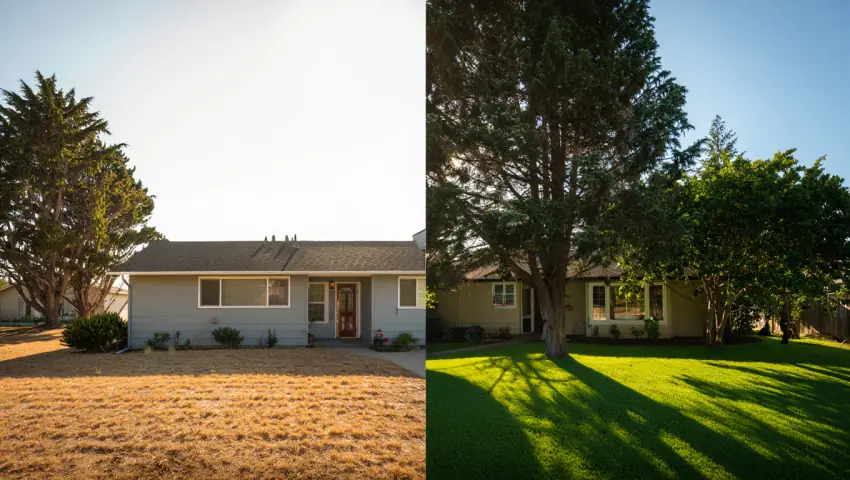
Many homeowners mistakenly believe that cooling coverage comes exclusively from broadleaf varieties like maples or oaks, but evergreens offer a versatile alternative. These plants retain their foliage throughout the seasons, providing a permanent canopy that alters the microclimate of a yard. Understanding the distinct nature of these species helps in planning a landscape that remains functional and beautiful 365 days a year.
What Are Evergreen Trees?
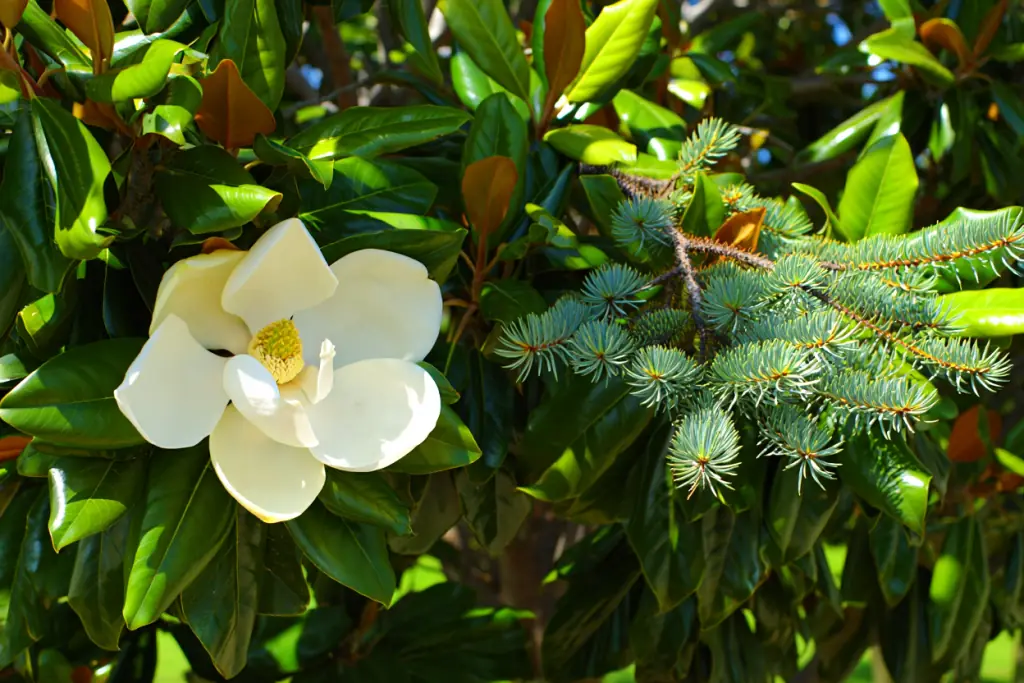
Evergreens fall into two primary categories: coniferous (needle-leaved) and broadleaf. Conifers, such as pines and hemlocks, usually bear cones and needles, while broadleaf varieties, like the Southern Magnolia, possess wide, flat leaves that persist through winter. Both types contribute significantly to energy efficiency. Their continuous canopy ensures consistent ground coverage, preventing the bare look common in winter landscapes. This density also acts as a formidable windbreak, blocking cold gusts and helping to reduce heating costs. Furthermore, the thick foliage is excellent for noise reduction, absorbing sound far better than bare branches, while simultaneously protecting the soil below from heavy rains.
According to the USDA Forest Service technical report “Energy-Saving Potential of Trees in Chicago,” increasing tree cover by 10% (about three trees per building) could reduce total heating and cooling energy use by 5–10%, and simulations cited in the report found that shade alone reduced annual cooling energy use by 31% in a prototypical Chicago home. (1994, USDA Forest Service)
Benefits of Planting Evergreen Trees for Shade
The advantages extend beyond simple aesthetics or temperature control. Evergreen trees for shade create a consistent ecosystem for local wildlife, offering shelter when deciduous forests are dormant. Birds often roost in the dense branches of hollies and cedars during snowstorms, making these plants vital for biodiversity.
Landscape architect and author Thomas Rainer (who has designed plantings for the U.S. Capitol grounds and the Rev. Martin Luther King Jr. Memorial) puts it this way:
“So for us the big shift is to think of plants not as individual objects but as dynamic systems.”
Mature shade trees boost curb appeal for family homes in suburbs, but in dense urban lots under 5,000 sq ft, oversized evergreens can actually lower value by blocking light or raising neighbor concerns about root damage. A home with established, healthy foliage suggests a well-maintained landscape to potential buyers. The shadows they cast protect outdoor furniture, decks, and siding from sun degradation, extending the lifespan of outdoor assets.
How Evergreen Trees Enhance Your Landscape
Integrating these giants requires a shift in perspective. Instead of viewing a planting as a solitary figure, consider it a ceiling for an outdoor room. They define boundaries and create depth. Practical evaluation of the landscape starts by mapping the sun to identify the critical “hot zones” at 3 PM in July. It also involves checking soil drainage—rapid drainage indicates sand, while standing water suggests clay—and looking upward to ensure no power lines interfere with where the canopy will eventually reach its mature height. Do a 1-gallon bucket test: if water disappears in under 5 minutes, you’ve got sandy soil; if it’s still pooling after 30 minutes, that’s heavy clay.
Best Evergreen Trees for Shade
Selecting the right species involves balancing aesthetic desires with the hard realities of climate and space. The best evergreen trees for shade vary largely by region; a specimen that thrives in the humid Southeast may perish in the arid Southwest.
Top Picks for Various Climates
| Tree Variety | Best Climate (USDA Zones) | Mature Height | Unique Benefit |
| Southern Magnolia | Zones 7–9 (South) | 60–80 ft | Massive leaves, fragrant flowers |
| Eastern White Pine | Zones 3–8 (North) | 50–80 ft | Fast growth, soft texture |
| Norway Spruce | Zones 2–7 (Cold) | 40–60 ft | extreme wind/snow resistance |
| Live Oak | Zones 8–10 (Coastal) | 40–80 ft | Sprawling canopy (wider than tall) |
| Loquat | Zones 8–10 (Warm) | 10–20 ft | Perfect for small urban yards |
Characteristics of Ideal Shade Trees
The best evergreen trees for shade share specific traits that make them superior for cooling. They typically possess a broad, spreading habit rather than a strictly columnar shape. A “pencil” profile, like an Italian Cypress, offers little relief from the midday sun. Ideal candidates feature horizontal branching where limbs grow outward rather than upward, casting a significantly wider shadow. Additionally, broadleaf varieties generally provide deeper cooling per branch compared to needle-bearing conifers.
| Tree Type | Shade Density* | Best For | Limitation |
|---|---|---|---|
| Southern Magnolia (broadleaf) | 95% | Patios requiring deep cooling | Drops large leaves in spring |
| Eastern White Pine (conifer) | 65% | Lawns needing dappled light for grass | Less effective for furniture protection |
| Norway Spruce (conifer) | 85% | Privacy + shade combination | Requires significant width (25+ ft) |
| Canadian Hemlock (conifer) | 75% | Shady areas under existing canopy | Slower growth rate |
*Measured as percentage of direct sunlight blocked at solar noon in July (USDA Forest Service methodology)
Comparing Evergreen vs. Deciduous Shade Trees
Choosing between evergreen and deciduous options often paralyzes homeowners. The best evergreen trees for shade solve the issue of winter barrenness but pose other challenges, such as constant shadowing in winter when solar heat might be desired.
The “Right Plant, Right Place” protocol suggests planting deciduous species on the south wall to allow winter sun to warm the house. The west wall is the ideal location to plant the best evergreen trees for shade. The late afternoon summer sun is brutal, and these hardy varieties block it effectively while acting as a windbreak against prevailing winter winds. Small evergreens work well on the east side to block morning sun without keeping the yard dark all day.
Never plant a large evergreen closer than 15 feet to a home foundation. Their root systems are extensive and need room to anchor the massive canopy.
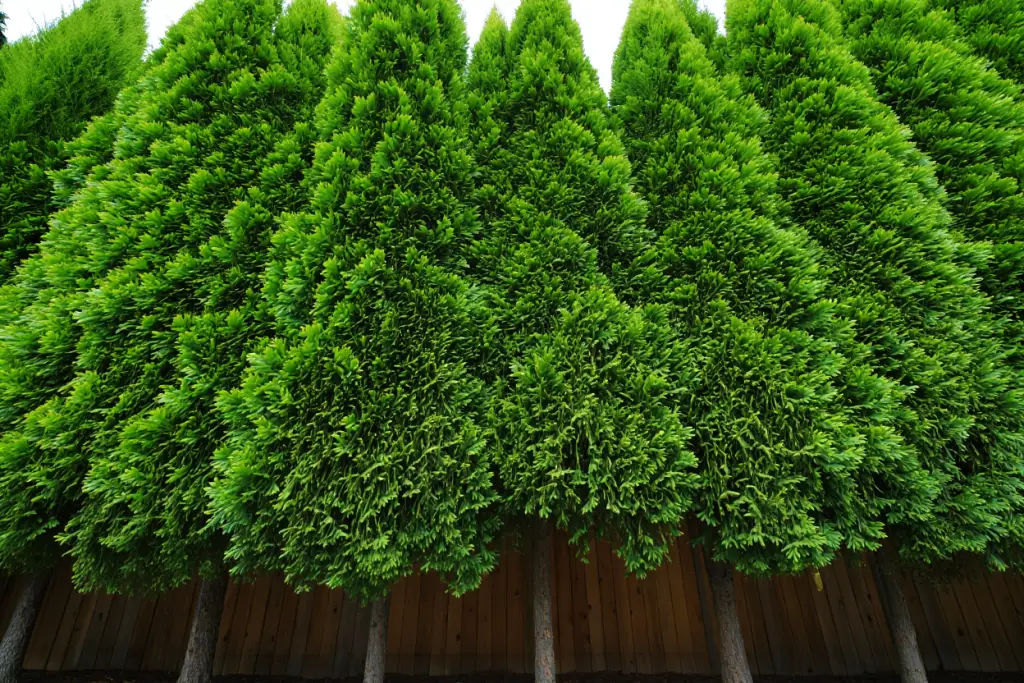
Fast Growing Evergreen Trees for Shade
Patience is a virtue, but few homeowners want to wait twenty years for a cool patio. Fast growing evergreen trees for shade are the solution for those needing immediate relief from the sun or the prying eyes of neighbors.
Quick Growth Options for Immediate Results
If you need shade quickly, choose one of these “biological rocket ships.” Here is the expected vertical growth rate per year under optimal conditions:
- Thuja Green Giant: Grows 3–5 feet per year. Best for privacy screens and narrow shade.
- Leyland Cypress: Grows 3–4 feet per year. ideal for rapid hedging but requires shearing.
- Cryptomeria (Japanese Cedar): Grows 2–3 feet per year. Offers a softer, elegant texture.
- Eastern White Pine: Grows 2+ feet per year. The fastest option for a traditional large shade tree look.
Finding fast growing evergreen trees for shade often involves a trade-off: speed usually comes with weaker wood. Rapid developers can be susceptible to storm damage compared to slower oaks.
Factors Influencing Growth Rates
Genetics alone will not produce a monster plant; the environment must support the potential of fast growing evergreen trees for shade. Soil nitrogen plays a huge role; applying high-nitrogen, slow-release fertilizer in early spring fuels foliage production. Water availability is equally critical for cell expansion, often requiring a drip irrigation system for consistent moisture. Sunlight exposure drives photosynthesis, so ensuring the specimen gets at least 6 hours of direct sun daily is non-negotiable.
Care Tips for Fast Growing Trees
Rapid development requires fuel. Fast growing evergreen trees for shade are hungry and thirsty.
Steps to Maximize Growth Speed
- Hydrate Aggressively: For the first two years, water is the limiting factor. A 6-foot sapling may need 10–15 gallons of water per week.
- Structural Pruning: Because they grow so fast, these plants can become lanky or develop co-dominant leaders. Prune annually to maintain a single central trunk.
- Mulch Maintenance: Maintain a 3-inch layer of organic mulch to regulate soil temperature and retain the moisture these thirsty giants crave.
Prune fast growing evergreen trees for shade annually to maintain a single central leader. This ensures that when the plant is 40 feet tall, it won’t split down the middle during a snowstorm.
If you’re choosing between Thuja Green Giant and Leyland Cypress, the differences that matter most aren’t in the pot size—they’re in long-term growth habit, maintenance, and how each performs in wind, heat, and storms. This comparison walks through practical pros/cons so you can match the tree to your site instead of buying on impulse. Watch this before you commit to a full row. For a deeper breakdown of screening density, maintenance, and long-term reliability, see our guide to the best evergreen trees for privacy
Low Maintenance Evergreen Trees for Shade
Not everyone has the time or desire to be a weekend arborist. What counts as ‘low maintenance’ shifts dramatically: a Juniper might need zero pruning in Arizona’s dry heat, but in humid Southeast zones, that same tree demands quarterly fungicide sprays to avoid lethal blight—so match the species to your regional disease pressure, not just the label.
Choosing the Right Low Maintenance Varieties
The secret to low maintenance is selecting species native to the region. These plants have evolved to handle local rainfall patterns and pests:
- The American Holly (Ilex opaca) is incredibly tough once established, offering drought tolerance and pest resistance along with dense shade.
- Juniper varieties are often “plant it and forget it” options, tolerating poor soil better than almost any other low maintenance evergreen trees for shade.
- The Cedar of Lebanon is slow to start but becomes a monument of resilience, requiring very little human intervention.
Low maintenance evergreen trees for shade typically have smaller needles or waxy leaves that retain water, reducing the need for irrigation.
Basic Care and Maintenance Tips
Correct mulching does 80% of the work. Apply a 2-3 inch layer of wood chips around the base to suppress weeds and retain moisture. A quick inspection once a year is better than a weekly fuss. When planting low maintenance evergreen trees for shade, avoid amending the soil too much; let them adapt to the native dirt immediately to encourage strong root foraging.
Common Issues and How to Avoid Them
Even low maintenance evergreen trees for shade can struggle if planted incorrectly. The goal is to let nature take its course. If you find yourself spraying chemicals every month, you likely chose the wrong species for your location.
| Issue | Description | Prevention Strategy |
| Volcano Mulching | Piling mulch high against the trunk. | Keep mulch 3 inches away from the bark to prevent rot. |
| Girdling Roots | Roots circling the trunk, choking it. | Loosen or slice the root ball before planting. |
| Winter Burn | Brown needles due to winter dehydration. | Water deeply in late autumn before the ground freezes. |
| Bagworms | Cone-like sacks hanging from branches. | Hand-pick them off in winter or spray early in spring. |
| Chlorosis | Yellowing needles due to nutrient lack. | Test soil pH; add iron or sulfur if indicated. |
The goal of low maintenance evergreen trees for shade is to let nature take its course. If you find yourself spraying chemicals every month, you likely chose the wrong tree for your location.
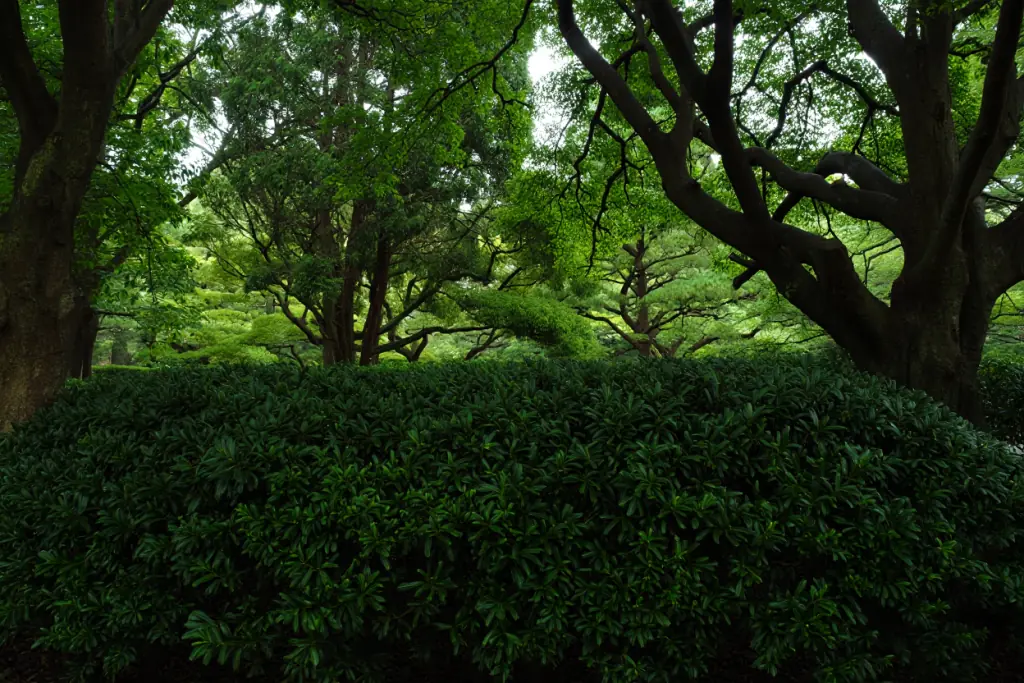
Shade Tolerant Evergreen Trees for Privacy
Often, a yard is shady because of existing large deciduous canopies, but the homeowner still needs privacy from neighbors. Shade tolerant evergreen trees for privacy are a specific niche of plants that can thrive under the canopy of taller giants while creating a visual barrier. We’re talking about spots getting 2–4 hours of filtered light daily—not pitch black under dense maples, but not full sun either.
Combining Shade and Privacy in Your Yard
Most conifers thrive in full sun when planted as specimens in open lawns, but when tucked beneath existing canopy in established landscapes, species like Canadian Hemlock actually outperform sun-lovers by adapting to 3–5 hours filtered light—context changes everything. These are perfect for filling in gaps between large oaks or maples. Shade tolerant evergreen trees for privacy allow for a “layered” landscape look, which is highly prized in garden design. Using these species effectively turns a dark, exposed backyard into a secluded woodland garden.
In a study of adults living in deprived urban communities in Scotland, higher levels of neighborhood green space were associated with lower perceived stress and healthier diurnal cortisol patterns (a physiological marker of stress). (2013, University of Edinburgh research team)
Top Privacy Evergreen Trees
- The Canadian Hemlock (Tsuga canadensis) is the gold standard for low-light tolerance. It can be sheared into a hedge or allowed to grow into a feathery specimen.
- The Japanese Yew (Taxus cuspidata) is one of the few conifers that handles deep darkness well; it grows slowly but forms a dense screen.
- American Arborvitae (Thuja occidentalis) prefers sun but can handle partial shadows and still provide a decent screen, though they may be slightly less dense.
Shade tolerant evergreen trees for privacy will grow slower than sun-loving counterparts. Expect patience, but the result is a durable, low-stress screen that doesn’t die back when the sun moves.
Planting Strategies for Maximum Privacy
To get the most out of shade tolerant evergreen trees for privacy, placement is key.
Steps for a Privacy Screen
- Determine the Sight Line: Stand on the patio and look at the neighbor’s window. This is the exact line where the barrier needs to be placed.
- Calculate Spacing: If the species grows 10 feet wide, plant them 6–7 feet apart for a dense screen, or 10 feet apart for a loose look.
- Dig a Trench: For a hedge effect, digging a continuous trench is often easier than individual holes.
- Orient the Plant: Rotate the specimen so the “good side” faces the viewing area before backfilling.
- Water Heavily: Shade often means competition from other roots, so initial water is vital.
Unique Evergreen Trees for Shade
For those tired of the standard pines and magnolias, evergreen trees for shade come in exotic and unusual forms that can serve as the centerpiece of a garden.
Rare and Unusual Varieties
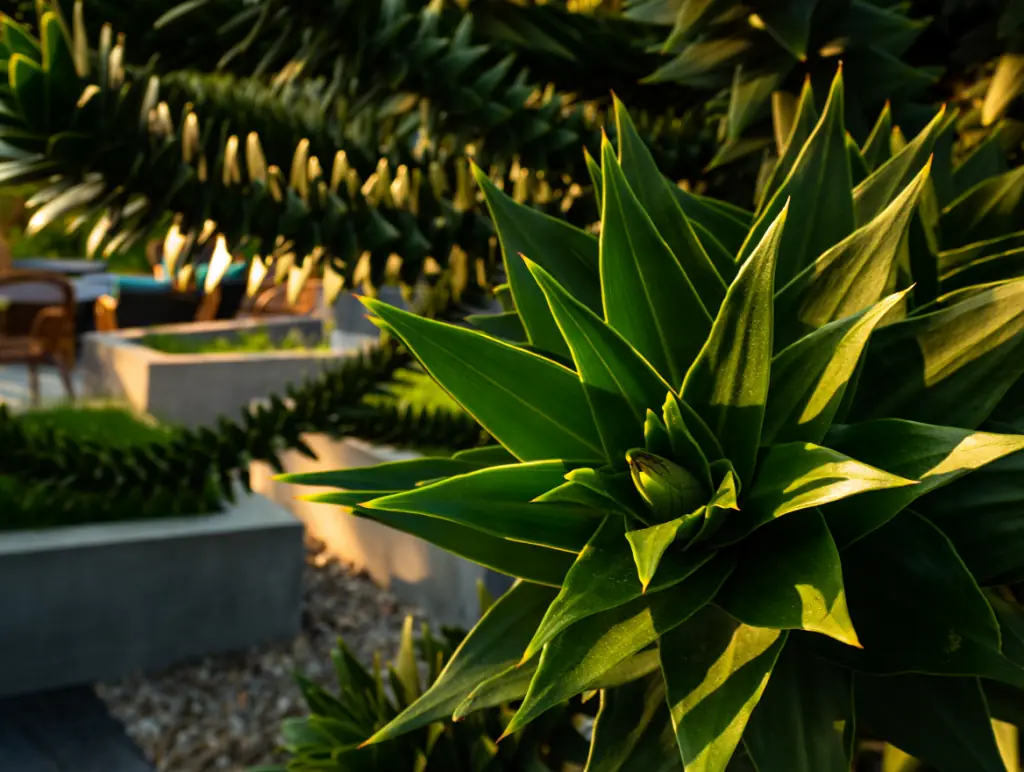
The Monkey Puzzle Tree (Araucaria araucana) is a prehistoric-looking conifer with sharp, triangular leaves that eventually forms an umbrella-like canopy. The Weeping Blue Atlas Cedar creates a waterfall of blue needles; if trained on a trellis, it can form a shady tunnel or a unique patio cover. The Japanese Umbrella Pine offers thick, rubbery needles and a distinct pyramidal shape. Using unique evergreen trees for shade signals a sophisticated design sense. These specimens often become neighborhood landmarks.
Design Ideas for a Unique Landscape
Consider planting a Weeping Blue Atlas Cedar in the center of a circular driveway as a focal point. Alternatively, pair a Monkey Puzzle with large ferns and hostas to create a “Jurassic” garden feel. You can also use the blue foliage of specific evergreen trees for shade against the dark green of traditional hedges to create visual depth.
Where to Find Unique Evergreen Trees
You will rarely find these at a standard home improvement store. Specialty nurseries that focus on rare woody plants are the best bet. Many arboretums sell offspring of their rare collection during seasonal sales. Reputable online specialists also ship saplings of rare evergreen trees for shade safely.
Planting and Caring for Evergreen Trees
The long-term success of evergreen trees for shade depends almost entirely on how they are put into the ground. A poor planting job creates a “struggling” plant that never quite provides the canopy desired.
Steps for Planting Evergreen Trees
Follow this exact protocol to prevent “transplant shock”:
- Hydrate the Roots: Soak the container or root ball in water for 30 minutes before digging. Dry roots are the #1 cause of death.
- Dig Wide, Not Deep: Excavate a hole 2 to 3 times wider than the pot, but no deeper. The root flare (where the trunk meets roots) must sit 1–2 inches above the surrounding soil grade.
- Inspect & Correct: Remove the pot. If roots are circling in a spiral, slice the outer layer vertically with a knife to encourage outward growth.
- Backfill with Native Soil: Fill the hole with the dirt you dug out. Do not add bags of peat moss or potting soil; this creates a “bathtub effect” that drowns roots.
- Mulch Correctly: Apply 3 inches of mulch, leaving a 3-inch gap around the trunk (donut shape) to prevent bark rot.
Arboriculture researchers Gary W. Watson (The Morton Arboretum) and E.B. Himelick (arboriculture author and researcher) emphasize a common failure point in installation:
“Planting too deeply is the most common mistake during planting, and it is nearly impossible to correct once completed.”
Most “tree planting failures” start on day one: the root flare ends up buried, circling roots stay intact, and the hole is dug like a flowerbed instead of a root runway. This video shows how to expose the root flare, prep the root ball, and set final grade so the tree establishes faster and avoids long-term decline. It’s especially useful if you’ve only planted shrubs before.
Seasonal Care Guidelines
- Spring: Fertilize lightly if growth is slow and inspect for new pest activity.
- Summer: Water is critical. Evergreen trees for shade lose water through their needles even in heat.
- Fall: Hydrate deeply before the ground freezes. This prevents “winter burn,” where needles dry out because frozen roots can’t pull up water.
- Winter: Gently brush heavy snow off branches to prevent breakage. Do not shake ice off; let it melt naturally.
Common Pests and Diseases
Evergreen trees for shade are targets for specific pests like spider mites, which cause needles to turn yellow or bronze. A strong blast of water often solves this. Scale insects look like white or brown bumps on twigs and suck sap, weakening the plant. Needle cast is a fungal disease causing foliage to drop, often remedied by improved air circulation.
Peer-reviewed research published in the International Society of Arboriculture journal Arboriculture & Urban Forestry notes that reduced tree vigor caused by moisture stress may predispose trees to additional health problems, particularly insect infestation. (2001, International Society of Arboriculture)
FAQ
How close to my house can I plant evergreen trees?
At least 15 feet. For large shade trees (like Pines or Spruces), planting closer than 15 feet risks foundation damage and mold on siding. Smaller columnar varieties (like Arborvitae) can be planted 5–6 feet away.
Do evergreen trees make the soil acidic?
No, this is a myth. While pine needles are acidic when fresh, they neutralize as they decompose. They will not significantly alter the soil pH deep in the ground where grass roots live.
Can I trim the top off my evergreen if it gets too tall?
Never. This practice, called “topping,” destroys the tree’s hormonal balance and structural integrity. It often leads to rot and ugly, multi-stemmed regrowth that breaks in storms.
Why are the inner needles of my pine tree turning brown?
This is often a natural process called “seasonal needle drop.” Evergreens do lose old needles, usually those closest to the trunk (2–3 years old), in the fall. If the tips of the branches are green and healthy, the plant is likely fine.
Will grass grow under dense evergreen trees?
Growing traditional turf under dense evergreens fails in zones 6–8 where fescue dominates, but in Pacific Northwest zones 8–9, fine fescue blends can persist under 70% shade if you accept patchy coverage and skip summer irrigation. It is usually more effective to plant shade-tolerant groundcovers like Pachysandra or Vinca, or simply use mulch, rather than fighting a losing battle with turf.
Conclusion
Choosing to plant evergreen trees for shade is an investment in the future comfort and beauty of a home. Whether the goal is to cool down a patio with a broadleaf Magnolia, block a neighbor with a fast-growing Green Giant, or add a unique architectural element with a Cedar, there is a species for every need. These giants offer a rare combination of utility and aesthetics, working year-round to improve energy efficiency and privacy.
The key to success lies in planning: analyzing the soil, measuring the space, and selecting a variety that fits the specific climate zone. By following the planting and maintenance steps outlined, anyone can establish a healthy canopy that will serve the property for decades. Do not rush the process—take the time to find the perfect specimen.
Would you like me to help you create a specific planting calendar based on your local hardiness zone?

Ready to head to the nursery? Don’t buy the wrong variety on impulse. I have prepared a comprehensive checklist that covers soil testing, spacing measurements, and questions to ask the nursery staff to ensure you get healthy stock.
Leave a comment below: What is the biggest challenge you face in your yard—lack of privacy or too much sun?
Sources
- (1994, USDA Forest Service) Energy-Saving Potential of Trees in Chicago
- (2013, University of Edinburgh research team) Green Space and Stress: Evidence from Cortisol Measures in Deprived Urban Communities
- (2001, International Society of Arboriculture) Tree Moisture Stress and Insect Damage in Urban Areas in Michigan
- Rainer, Thomas. 2017. Call of the wild: Look to nature for garden guidance
- Watson, Gary W.; Himelick, E.B. 1997. Principles and Practice of Planting Trees and Shrubs