White Pine Trees for Sale in Michigan – Local Growers & Prices
Updated in 2026
Looking for white pine trees for sale in Michigan? You’ve come to the right place. Michigan’s cooler, humid climate — especially around the Great Lakes and in the northern Lower Peninsula — makes it an excellent fit for eastern white pines and similar evergreens. Local growers offer healthy, hardy trees ready for your yard or property. Whether you need a windbreak, privacy screen, or just a beautiful addition to your landscape, white pine trees are a top choice. Prices vary by size and farm.
From Detroit to the Upper Peninsula, nurseries sell quality trees that thrive in sandy soil and cold winters. Here are the best places to buy, planting tips, and why these trees are a smart choice for Michigan landowners. At the end of this article, you’ll be able to download a printable checklist that breaks down real Michigan white pine pricing — local vs online options, delivery and install scope, paperwork, and smart ways to save.
To see why white pines are such a great fit for Michigan yards, check out this step-by-step planting guide that highlights their easy adaptation to local conditions.
Top Michigan Tree Farms for White Pines & Spruces
If you’re looking for white pine trees for sale in Michigan, you have plenty of reliable options. The Great Lakes State is full of nurseries and tree farms that produce tough evergreens that handle our winters just fine. Whether you need a Norway spruce in Michigan or a classic blue spruce for sale in Michigan, local growers have you covered.
Where to Find Quality Evergreens Across the State
From the sandy soil of the Lower Peninsula to the rugged Upper Peninsula, Michigan’s evergreen trees thrive in all conditions. Some standouts include Hidden Acres Tree Farm near Grand Rapids, which specializes in white pine and blue spruce. In Fenton, Evergreen Ridge Nursery (yes, that’s a Fenton MI tree nursery) offers wholesale orders for landscaping projects. If you’re up north, check out Pine Ridge Growers — their inventory is robust enough for Michigan’s unpredictable weather.
For the most up-to-date inventory, check real Michigan growers like Mulder’s Nursery (Kalamazoo area), Wahmhoff Farms (southwest MI), Cold Stream Farm (wholesale bare root), and Bosch’s Countryview Nursery — many now list 2026 pricing online.
Choosing the Right Farm for Your Needs
Not all trees sell the same size or quality. Smaller operations may focus on seedlings, while larger suppliers carry the best mature trees for Michigan’s sandy soil. Prices vary, so it’s smart to call ahead. Some growers even ship, saving you the hassle of hauling trees yourself. Whether you’re planting a single tree in your backyard or an entire windbreak, Michigan tree farms make it easy to transform your property.
White Pine vs. Norway Spruce – Which Grows Better in MI?
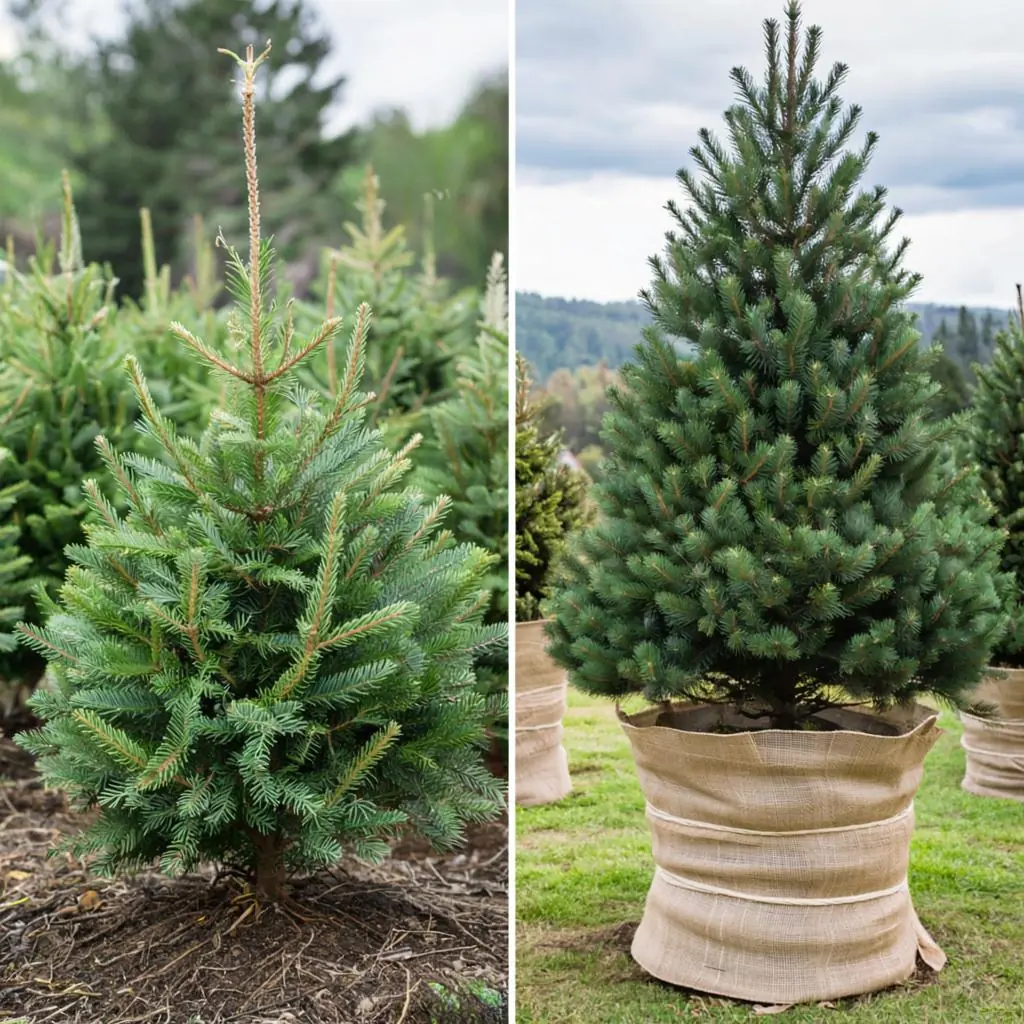
Deciding between white pines for sale in Michigan and Norway spruce trees? Both evergreens thrive here, but they have different strengths. In the sandy, well-drained soils of Michigan’s northern Lower Peninsula, white pine can grow faster initially than Norway spruce (up to 60–90 cm per year in exposed conditions). The latter often provides better wind resistance in exposed, moist areas. This applies to windbreaks in clay-loam soils, especially for mature stands (over 50 years old), where density is more important than growth rate.
Your choice should be determined by:
- soil type;
- space;
- landscaping goals.
To explore more options for creating shaded areas with evergreens, compare white pines with other varieties suited for Michigan landscapes.
Growth patterns and climate adaptability
Michigan evergreen trees must cope with our harsh winters and wet summers. In Michigan’s sandy, glacial-fluvial soils, white pines can grow relatively rapidly with minimal competition, adding about 60-90 cm per year when young (10-20 years old). However, this growth rate is typical primarily for plantations on average-quality soils and slows to less than 30 cm per year at maturity (after 55 years). Norway spruce trees grow more slowly, but form thicker, sturdier branches. If you are near Lake Michigan where the winds blow, the spruce’s compact form will hold up better.
White pine may be one of the most adaptable trees for well-drained, sandy soils of poor to moderate quality in northern Michigan, such as the Upper Peninsula, particularly for erosion control projects on old pastures in the regeneration stage (from seedlings to 20 years old). However, in very dry or compacted sands, it may perform worse than red pine.
The deep taproots of white pine can help stabilize loose, sandy soils in Michigan’s glacial deposits by providing adequate moisture. This can be useful, for example, in windbreak projects or slope reforestation. However, this effect is most pronounced during the establishment and mid-maturity stages (up to 50 years), before the root system encounters competition or drought.
Norway spruce prefers heavier soil but adapts well once established. Both white pine and Norway spruce exhibit resistance to some common pests in Michigan’s humid northern climate, but Norway spruce can struggle with aphids in drier southern regions or during drought years. This is especially true in shelterbelt projects with dense plantings during the seedling stage (up to 15 years), while white pine is more vulnerable to rust in young stands with high humidity.
Landscaping Uses and Maintenance Needs
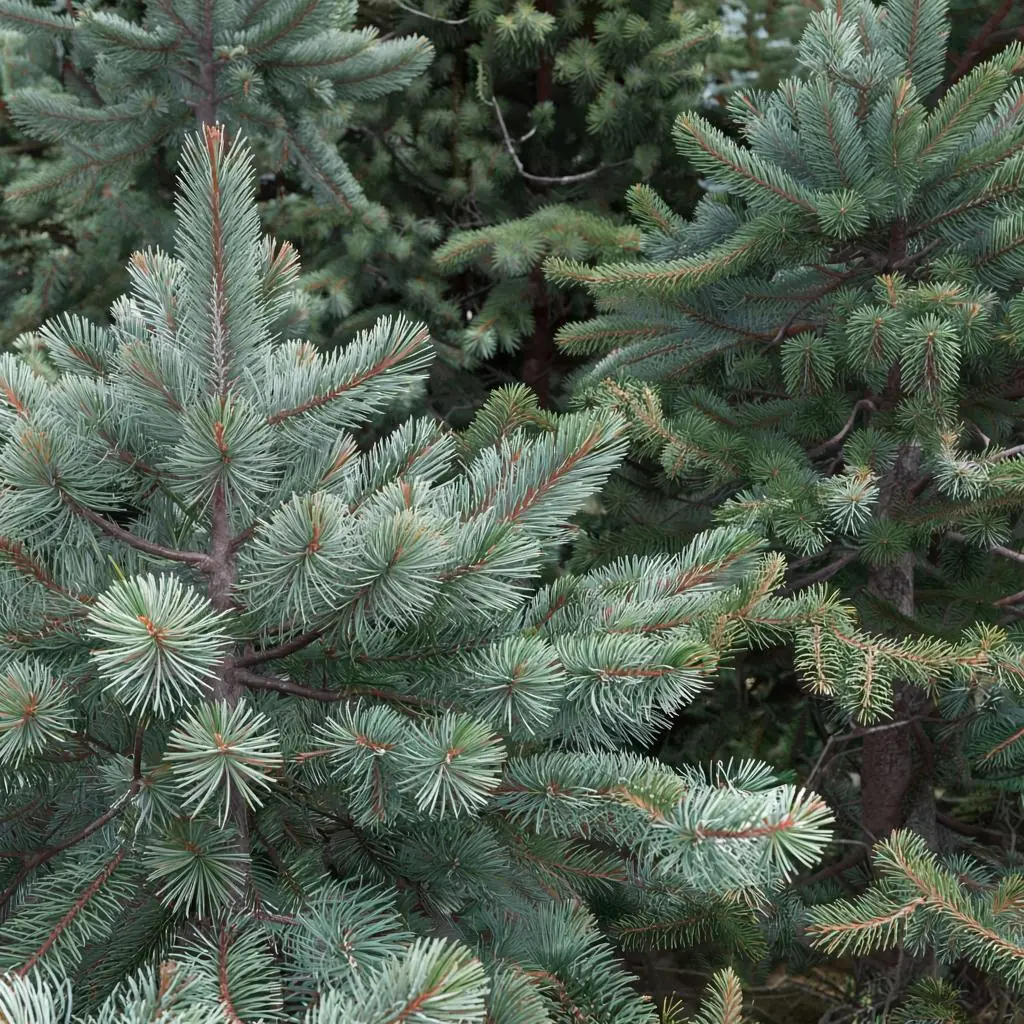
Privacy lovers love white pines sold in Michigan for their rapid growth in height. Just know that they will eventually need more than 50 feet of vertical space. Norway spruce is better suited for windbreaks while maintaining dense foliage on the ground.
Care is different, too. In Michigan, white pines naturally shed their old needles in the fall. Therefore, golden needles aren’t always a cause for concern in landscapes on acidic, sandy soils. However, it can indicate stress in young trees (less than 10 years old) or in urban areas with pollution or poor drainage.
Norway spruce typically requires little to no pruning in Michigan’s rural windbreak projects on moist loams, but can benefit from spring fertilization during the growth phase (10–40 years), though over-fertilization risks in sandy, low-nutrient contexts or mature stands may lead to weak branches. At Fenton Nursery in Michigan, experts recommend white pines for quick screens and spruce for long-term structure.
If you’re torn, consider mixing the two. Many Michigan properties use white pine trees as a fast-growing backdrop. Blue spruce trees sold in Michigan are used as decorative accents. This combination provides immediate impact while creating variety.
2026 Price List: Evergreen Trees in Michigan
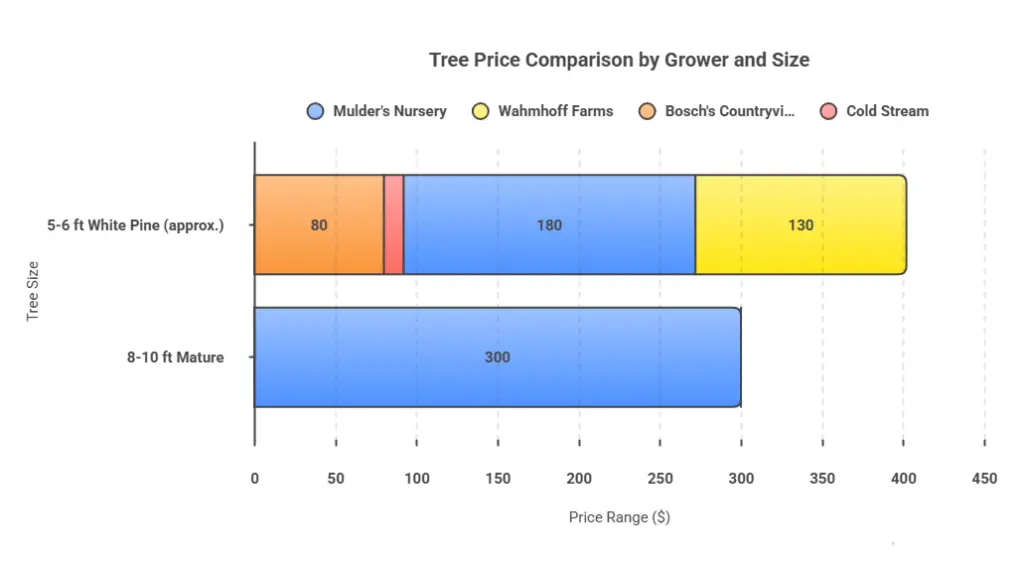
Looking for white pine trees for sale in Michigan this year? Prices vary depending on size and quality, but we have the latest data. Small seedlings (3-4 feet) start at $50–$80 (bare root/transplants often $4–$25, potted higher). Many nurseries offer discounts of 10-20% for bulk orders.
Current Prices for Popular Varieties
Michigan evergreen trees follow seasonal pricing trends:
- Blue spruce trees for sale in Michigan typically cost 10-15% more than similarly sized white pines.
- A 6-foot white pine typically $150–$200, Norway spruce $160–$220 (e.g., Mulder’s Nursery and similar 2026 listings).
- Fenton, MI nursery recently offered prices as high as $85 for 4-foot blue spruce trees.
Drought-tolerant varieties, such as the best trees for sandy soil in Michigan, sometimes command a premium. Expect to pay 5 to 10 percent more for these seasoned specimens. Some growers offer package deals if you mix white pines with Michigan Norway spruce varieties.
Factors Affecting Your Final Cost
Shipping adds to the cost. Many farms charge more than $50 for shipping within 50 miles. Digging up large root balls also adds to labor costs. 10-foot white pines often $450–$600 before installation and delivery.
Time your purchases wisely. Early spring stores offer the best selection, and fall sales sometimes occur. Fenton MI tree nursery runs sales in late April. Ask about warranties – Some growers guarantee their Michigan evergreen trees for a full year.
Prices sourced from Michigan nurseries like Mulder’s, Wahmhoff Farms, and Bosch’s Countryview (2025–2026 catalogs); call for current quotes as they fluctuate seasonally.
How to Plant Evergreens in Sandy Soil (MI Climate Tips)
Sandy soils can be challenging for evergreens. With the right approach, your white pine trees for sale in Michigan will thrive. These native conifers actually adapt well to loose, well-drained soil when planted correctly. The trick is proper preparation and subsequent care tailored to our unique climate.
Preparing Sandy Soil for Success
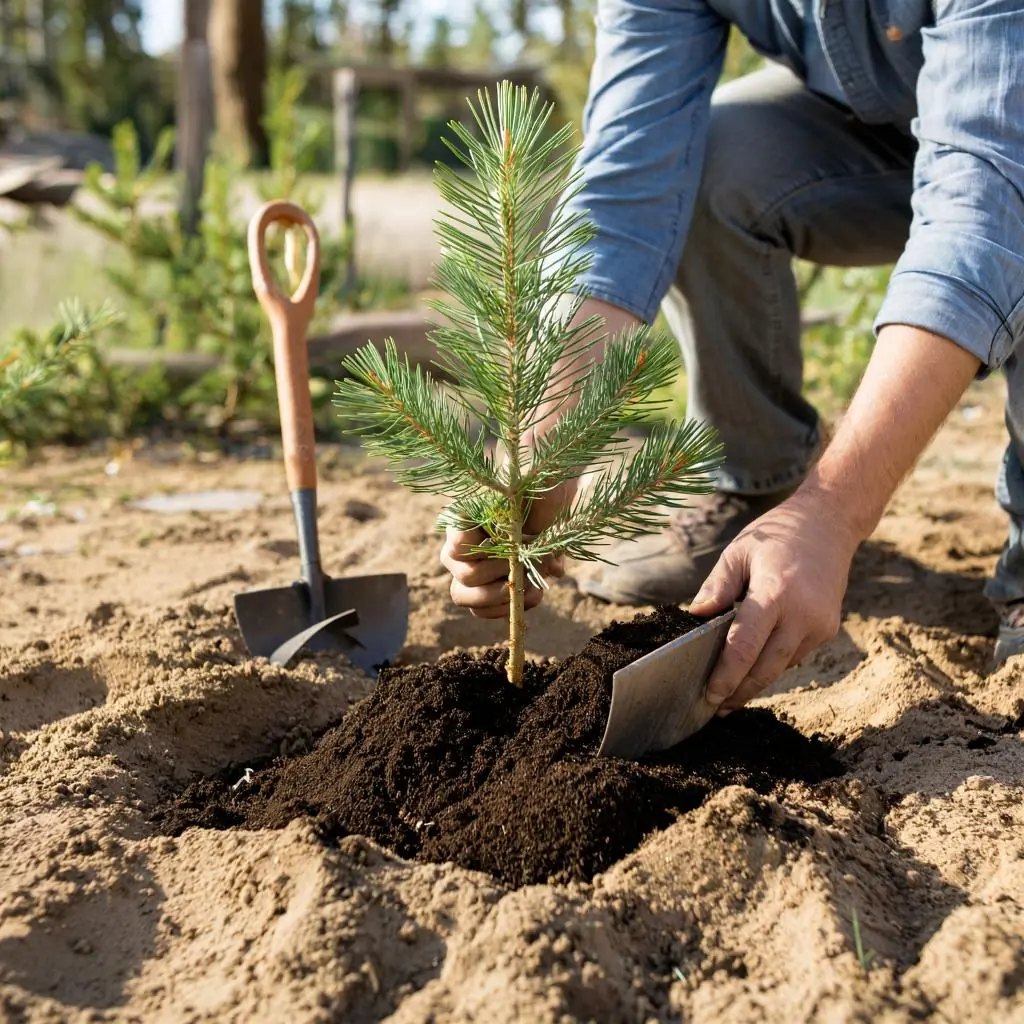
Start by checking the pH of your soil. Michigan evergreens prefer slightly acidic conditions between 5.5 and 6.5. Sandy spots often need organic matter. Work 3 to 4 inches of peat moss or compost into the top 18 inches of soil. This helps retain moisture and nutrients that are typically washed out of sand too quickly.
When choosing the best trees for sandy soil in Michigan, look for trees with established root systems. Container-grown white pines adapt better to these conditions, especially compared to those that have been balled and burlapped. Dig holes twice as wide as the root ball, but no deeper—settling can drown the roots in sandy soil.

Watering and Care Strategies
Newly planted white pines sold in Michigan need consistent moisture in sandy soil:
- Water deeply 2 to 3 times a week during the first growing season.
- Mulch with 3-inch wood chips, leaving them 6 inches from the trunk to prevent rot.
- Fertilize lightly in early spring using a slow-release formula.
Sandy soils cannot hold nutrients, so shallow, frequent feedings are best. Watch for needle color changes, which often signal nutrient deficiencies in porous soil.
For wind protection, consider mixing with Michigan Norway Spruce varieties as companion plantings. Their dense growth helps protect young white pines from drying winds. Fenton MI Tree Nursery recommends this combination for problematic sandy sites.
Before you head to a local nursery, watch this hands-on video showing two affordable and effective ways to source and plant white pines in conditions similar to Michigan’s sandy soils.
Best Nurseries Near Detroit & Flint for Bulk Orders
Need a dozen white pine trees for sale in Michigan for a large landscaping project? The Detroit and Flint metro areas boast several nurseries that specialize in wholesale evergreens. These growers offer competitive prices and often provide shipping services for large orders.
Best Wholesale Suppliers in Southeast Michigan
Evergreen Acres, located north of Flint, offers an impressive inventory of Michigan evergreen trees in large quantities. Their minimum order starts at 25 trees, with volume discounts starting at 50 or more. For those looking for blue spruce trees for sale in Michigan, their inventory includes Colorado and Black Hills varieties.
Downriver Evergreens serves the Detroit market with field-grown material that is adapted to local conditions. They specialize in larger white pine trees for sale in Michigan, perfect for projects with an immediate impact. Their delivery trucks can carry up to 40 trees in balls and burlap bags per trip.

What Wholesale Buyers Should Consider
Order timing affects availability and price. Fenton MI Tree Nursery recommends placing bulk orders by March for spring planting. Summer purchases often mean limited selection, although some growers offer summer discounts on remaining stock.
Check root systems before committing to large quantities. The best trees for sandy soil in Michigan should have firm, white root tips. Avoid specimens with rounded roots or those that appear loose in their containers.
For mixed evergreen screens that combine Michigan Norway spruce varieties with white pines, ask about custom blending options. Many wholesalers create custom packages at discounted prices. Don’t forget to factor in shipping costs — some include it for free on orders over 100 trees.
Why White Pines Thrive in Michigan’s Climate
The area’s unique environment makes it ideal for growing healthy white pine trees for sale in Michigan. Cold winters, wet summers, and a variety of soil conditions create the perfect growing conditions for these native evergreens. They have adapted over the centuries to whatever weather the Great Lakes region throws at them.
Natural Benefits of Michigan’s Ecosystem
The state’s abundant rainfall provides Michigan’s evergreen trees with plenty of moisture without drowning their roots. Benefits include:
- White pine trees are particularly fond of acidic soils, which many other species struggle with.
- Their deep root systems are firmly anchored in both the sandy soil of the Upper Peninsula and the heavier clay of the Lower Peninsula.
- These conifers handle temperature changes like champs.
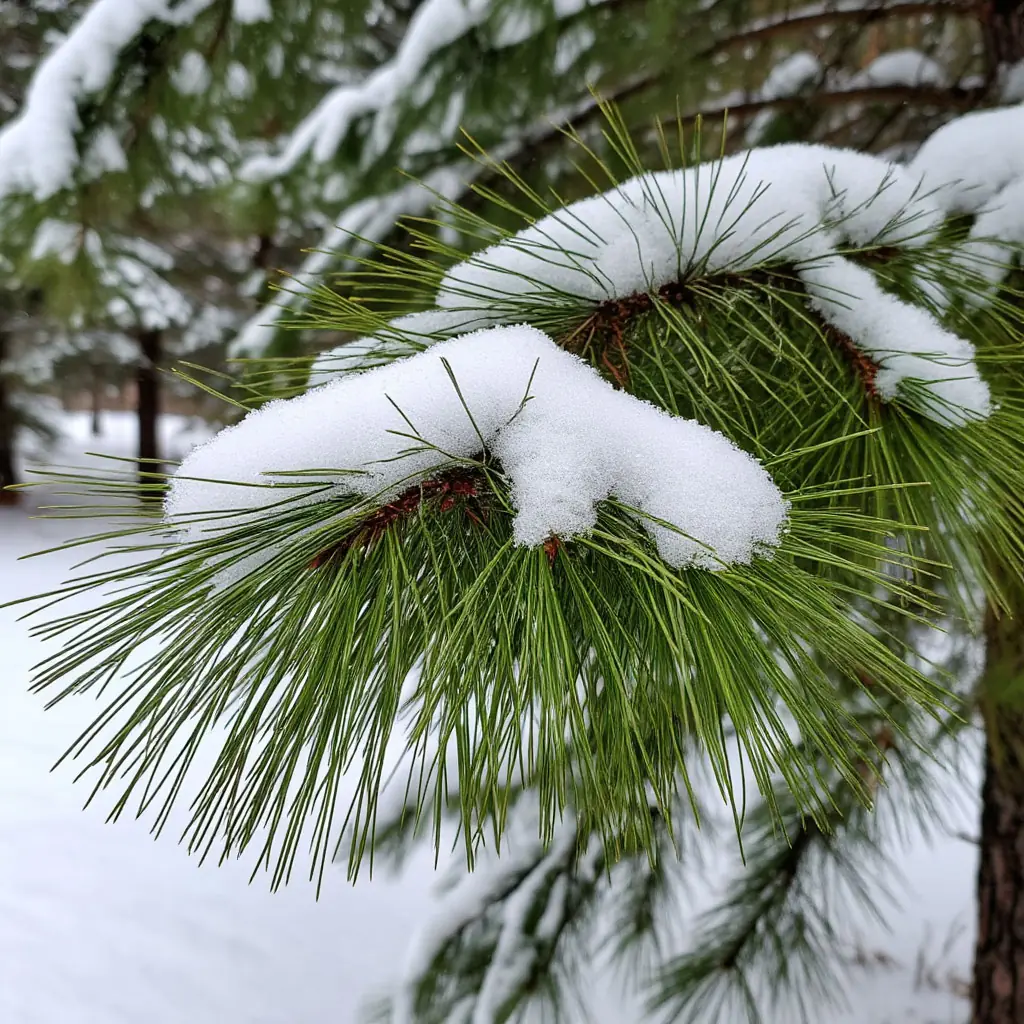
While blue spruce trees for sale in Michigan may experience stress during February thaws, white pine trees can handle seasonal changes without a hitch. Their flexible branches shed heavy snow loads that would break less adaptable species.
A synthesis of emerging health issues and regeneration studies shows that eastern white pine excels in stabilizing sandy soils across the Great Lakes region, with deep taproots reducing erosion on sites like those in Michigan’s Upper and Lower Peninsulas, though monitoring for blister rust remains key in stressed plantings. (2018, Forest Ecology and Management / University of Maine CRSF)
“Eastern white pine is a crucial species in the eastern U.S. forests, but health challenges from native pests have increased since the 1990s, emphasizing the need for proper site selection and management in areas like Michigan.” Said by William H. Livingston, forest pathologist and researcher at University of Maine (co-author of multiple white pine health syntheses).
Long-Term Benefits for Landowners
Planting white pines for sale in Michigan pays off for decades. They grow faster than most Michigan Norway Spruce varieties, quickly providing privacy and wind protection. Mature trees attract wildlife, and require minimal care after planting. White pines also make excellent Christmas trees thanks to their soft needles and natural shape, providing seasonal value beyond landscaping.
For challenging areas, they are one of the best trees for sandy soil in Michigan. Their extensive roots prevent erosion better than shallow-rooted alternatives. Fenton Nursery, Michigan, reports that white pines have a higher survival rate than imported species in Michigan’s variable conditions.
These low-maintenance giants enhance their surroundings. White pines filter air pollutants and provide year-round visual interest. Their pine needle mulch naturally acidifies the soil, creating ideal conditions for acid-loving companion plants.
FAQ
Do I need any permits or paperwork to plant white pine trees for sale in Michigan on my residential property?
Most homeowners in Michigan can plant white pine trees on private property without getting a permit. You usually only run into rules if the site is protected wetland, part of a shoreline setback, or in an HOA with landscape restrictions. If you’re planting a lot of trees from a Michigan white pine nursery on a vacant parcel, local zoning might treat it as reforestation or habitat work, which can trigger review. It’s smart to ask your township before planting near ditches, drains, or easements.
How far apart should I plant white pine trees for sale in Michigan if I want a fast privacy screen?
For a living privacy wall, Michigan growers often suggest planting white pine trees about 8 to 10 feet apart, center to center. This gives them room to expand without choking each other out. If you want a super dense visual block as fast as possible, you can stagger them in two offset rows at 8-foot spacing. Tighter than that looks good for a few years, but long term it can create crowding and needle drop low on the trunk.
Are white pine trees for sale in Michigan deer resistant, or will deer eat them in winter?
White pine is not considered deer resistant in Michigan. In winter, hungry deer will browse the soft new growth and can deform young leaders. If you’re installing a new row from a Michigan white pine nursery on rural land, plan on using cages or temporary fencing until trunks gain height. Norway spruce and blue spruce are usually less attractive to deer, so some landowners mix them on the outer edge as a buffer.
What diseases or pests should I worry about with Michigan white pine nursery stock, like white pine blister rust?
White pine blister rust is a known fungal disease that can affect eastern white pine, especially young trees under stress. The pathogen needs alternate host plants (like certain currants and gooseberries), so keeping those away from new plantings lowers risk. Good airflow, not planting too deep, and avoiding constant soggy roots also cut down on issues.
Can I move or transplant larger white pine trees for sale in Michigan during summer, or should I only plant in spring/fall?
Large balled-and-burlapped white pine and Norway spruce for Michigan landscapes generally establish best when planted in early spring or early fall, while temperatures are cooler and moisture is more predictable. Summer transplanting is possible, but survival drops unless you have an aggressive watering plan. Heat stress makes it harder for the tree to push new feeder roots into your soil. If you’re paying for installation from a Michigan white pine nursery, ask if they guarantee summer installs; many won’t, and that tells you a lot.
Conclusion
Whether you’re looking for white pine trees for sale in Michigan or considering other Michigan evergreen trees, the state’s nurseries offer quality options for every need. From the sandy soils of the Upper Peninsula to urban landscapes near Detroit, these hardy evergreens provide beauty, privacy, and environmental benefits. The key is choosing the right species for your specific location and soil conditions.
Remember, proper planting and care are critical to the long-term success of your trees. Local experts at places like Fenton MI Tree Nursery can provide valuable advice tailored to Michigan’s unique climate. With their guidance and the right selection of blue spruce trees for sale in Michigan or other varieties, you’ll enjoy thriving evergreens that will enhance your property for generations.

Before you pick a nursery or approve a quote, download the checklist. It turns Michigan pricing into a clear, line-by-line plan with local price anchors and example budgets, so you can compare offers fairly and avoid surprise fees.
Sources
- A synthesis of emerging health issues of eastern white pine (Pinus strobus) in eastern North America (2018, Forest Ecology and Management / Center for Research on Sustainable Forests, University of Maine). Full PDF also available at: CRSF University of Maine.
- White Pine Pricing (Fall 2025 / Spring 2026 catalogs) — Bosch’s Countryview Nursery (e.g., 2-0 White Pine 6-12″: $80/100, 2-2 12-18″: $195/100); Wahmhoff Farms Nursery (Eastern White Pine transplants: 2-1 8/14″ from $110, 2-2 10/16″ from $130, 2-2 14/20″ from $150); Mulder’s Nursery (retail landscape sizes, call for current quotes as no public 2026 list found, but consistent with regional trends).
- Eastern White Pine | Silvics of North America (USDA Forest Service, 1990, with current updates and references).
- Stumpage Price Reports (Michigan DNR, 2025) (e.g., statewide average sold prices for White Pine sawtimber ~$66–$70/MBF in 2025 reports, with regional variations from $20–$118/MBF depending on unit and quarter; see Q3 and Q4 2025 PDFs for details).