Emerald Green Arborvitae: A Comprehensive Guide
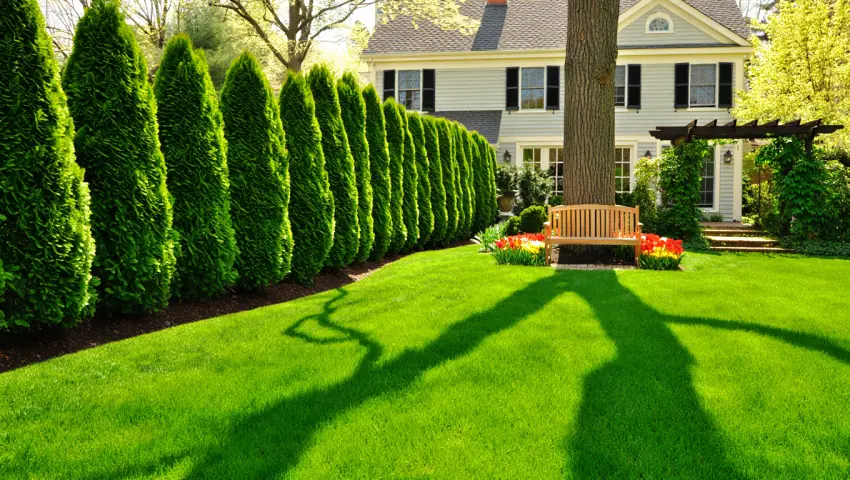
Finding the perfect balance between privacy and aesthetics in a garden often feels like a high-stakes puzzle, and for many homeowners, the solution lies in a specific, cone-shaped conifer. If you are looking to build a natural screen that doesn’t consume your entire yard, the Emerald Green Arborvitae is likely at the top of your list. This plant has become a staple in American landscaping not just because it looks good, but because it solves the functional problem of creating boundaries without the harsh look of a fence.
However, simply buying a row of trees and putting them in the ground is a recipe for disappointment if you don’t understand the specific biological needs of this evergreen. By the end of this guide, you will have the knowledge to select, plant, and maintain these trees to ensure they thrive for decades, increasing both your property’s value and your personal peace of mind. Plus, stick around until the end for a downloadable maintenance checklist to keep you on track.
Understanding Emerald Green Arborvitae
To get the most out of your landscape, you need to understand exactly what you are planting. Many people confuse different types of thujas, leading to spacing errors and maintenance nightmares.
What is an Emerald Green Arborvitae?
Technically known as Thuja occidentalis “Smaragd”, this plant is a semi-dwarf cultivar of the American Arborvitae. Unlike its wild cousins that can grow unruly and brown, the Emerald Green Arborvitae Smaragd was bred specifically to maintain a tight, pyramidal shape and a vibrant color throughout the year. It does not turn the bronze-brown color in winter that is typical of other varieties, provided the specimen is healthy.
Emerald Green works for tight spaces in residential zones 4–7 where max height stays under 15 ft. It fails on slopes >15° (roots slide) or in coastal salt-spray zones (foliage burns). Because the cultivar grows vertically rather than spreading wide, it fits perfectly in side yards or along property lines where horizontal space is at a premium.
Origins and History
The ‘Smaragd’ variety originated in Denmark in 1950. It was developed at the D.T. Poulsen Nursery, where breeders sought a hardier, more attractive version of the native North American white cedar. The name “Smaragd” is actually the Danish word for “emerald,” which perfectly describes its foliage.
A multi-site field evaluation in northeastern Canada documented that winter damage varies significantly among Thuja occidentalis cultivars (including ‘Smaragd’), helping explain why certain selections are preferred for cold-climate screening. (2000, Canadian Journal of Plant Science—Agriculture and Agri-Food Canada).
Characteristics and Appearance
The most defining feature of this tree is its foliage. The sprays are flat and glossy, growing in a vertical pattern that gives the shrub a neat, groomed appearance without any shearing.
- Foliage: Bright, lustrous hues that resist winter bronzing.
- Bark: Reddish-brown, often hidden by the dense needles but adds texture as the plant ages.
- Shape: Naturally narrow and pyramidal.
When discussing the Emerald Green Arborvitae height, it is important to note that this is a semi-dwarf tree. It won’t reach the towering stature of a forest pine, which makes the conifer manageable for residential zones. Regarding Emerald Green Arborvitae size, the width is just as important as the vertical reach; its narrow footprint is the main selling point for suburban lots.
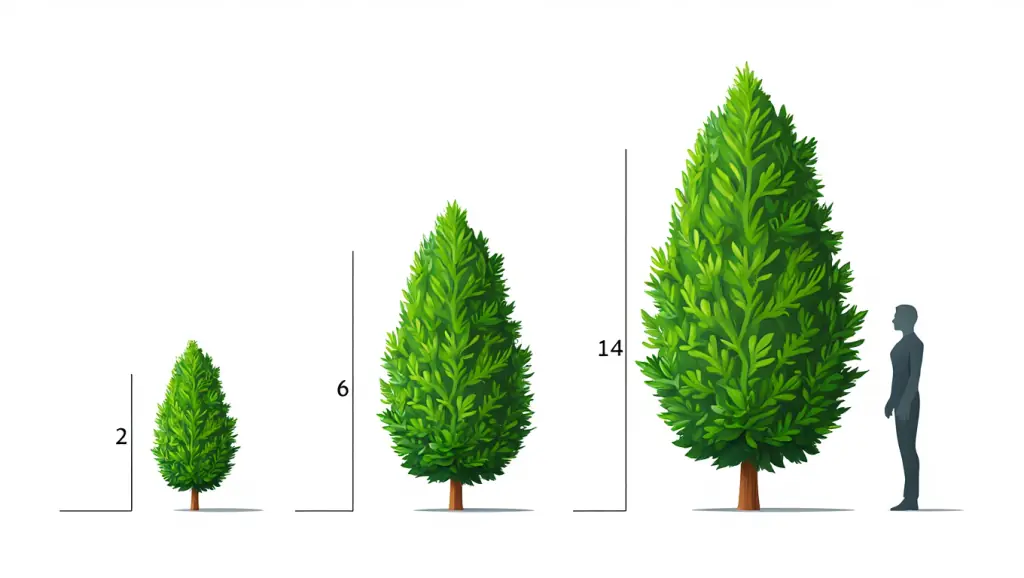
Visual Reference: At maturity, an Emerald Green Arborvitae occupies roughly the same horizontal space as a standard patio umbrella base (3–4 ft diameter) while reaching two-story height—making it ideal for property lines where every inch counts.
Neil Bell says: “Some people look down on arborvitae, but it fits in places where other plants can’t.” (2024, Oregon State University Extension Service).
Foliage Density
Blocks 60–70% of wind/sound when planted 2.5 ft apart at 8+ ft height. Below 6 ft height or spaced >4 ft apart, effectiveness drops to under 30%—barely better than open space. The tight branch structure traps snow, which can be heavy, but it also blocks visual intrusion effectively from day one.
Growth and Development
Understanding how this plant develops is crucial for setting realistic expectations. It is not a bamboo stalk that shoots up overnight; the species requires patience.
Emerald Green Arborvitae Growth Rate
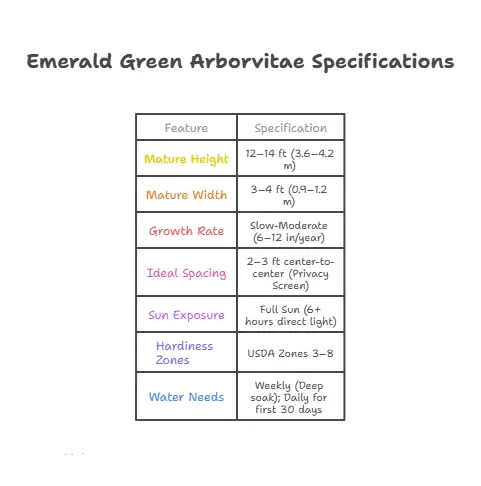
The Emerald Green Arborvitae (Thuja occidentalis “Smaragd“) has a slow-to-moderate growth rate, adding 6–12 inches (15–30 cm) per year vertically.
Mature Specifications:
- Mature Height: 12–14 feet (3.6–4.2 meters).
- Mature Width: 3–4 feet (0.9–1.2 meters) at the base.
- Hardiness Zones: USDA Zones 3–8.
Factors Affecting Growth
Several environmental variables dictate whether your tree hits the 12-inch mark or stalls at 4 inches.
- Sunlight Exposure: They need 6+ hours of direct sun for 10–12″ annual growth. With 4–6 hours you’ll get 6–8″ per year; below 4 hours expect under 4″ and increased winter bronzing risk.
- Soil Quality: Soil should drain 1–2 inches per hour. Test by filling planting hole with water: if it sits >4 hours, mix in 30% compost by volume before planting.
- Water Consistency: Drought causes the conifer to stop expanding to conserve energy.
- Competition: Grass or weeds invading the root zone steal nutrients.
The Impact of Climate Zones
While they are hardy in USDA zones 3 through 8, the Emerald Green Arborvitae size will maximize faster in zones 5 and 6, where the balance of warmth and rainfall is ideal. In hotter regions like zone 8, heat stress can slow them down.
Emerald Green Arborvitae Size and Height
Mature dimensions are non-negotiable when planning a layout. A fully mature Emerald Green Arborvitae height typically falls between 12 and 14 feet, though some ancient specimens may reach 15 feet.
In terms of width, the Emerald Green Arborvitae Smaragd stays compact, usually topping out at 3 to 4 feet wide at the base. This predictable Emerald Green Arborvitae size prevents the “hedge creep” that happens with other species, where the vegetation eventually takes over the sidewalk or driveway.
Estimating Growth for Your Yard
- Measure Current Stature: Start by measuring the specimen at purchase (usually 2-4 feet).
- Calculate Time to Maturity: Divide the desired altitude (e.g., 10 feet) minus current size by the average annual expansion (0.75 feet/year).
- Adjust for Acclimation: Add one year to this calculation, as transplants rarely expand significantly in their first season while they establish roots.
- Mark the Calendar: This gives you a realistic timeline for when your privacy screen will be complete.
Privacy Timeline Calculator
Use this table to estimate when your screen will provide full privacy based on current height and spacing:
| Current Height | Spacing (ft) | Years to 6-ft Privacy* | Years to 10-ft Privacy* |
|---|---|---|---|
| 2 ft | 2.5 | 4–5 years | 9–11 years |
| 3 ft | 3.0 | 3–4 years | 7–9 years |
| 4 ft | 3.0 | 2–3 years | 6–8 years |
*Assumes optimal conditions: full sun, well-draining soil, consistent watering. Add 1–2 years for zones 3–4 or heavy clay soil.
Do not fertilize a newly planted arborvitae in an attempt to force the Emerald Green Arborvitae growth rate. The root system must establish first; pushing nitrogen too early will burn the young tendrils and actually stunt the tree’s long-term development.
2026 Pricing Guide
Emerald Green Arborvitae pricing varies significantly by container size and region. As of early 2026, expect to pay:
• 1-gallon (1–2 ft): $19.99–$39.99
• 3-gallon (2–3 ft): $39.00–$79.99
• 5-gallon (4–5 ft): $72.95–$125.00
• Balled & burlapped (6+ ft): $145.00–$250.00
Pro tip: Buying in quantities of 5+ often triggers 10–15% bulk discounts at independent nurseries.
Planting and Care
The difference between a lush hedge and a row of brown sticks is almost always planting technique and water management.
Ideal Planting Conditions
The Emerald Green Arborvitae growth rate is heavily dependent on the start you give the plant. These trees prefer slightly acidic to neutral soil (pH 6.0 to 7.0). They absolutely detest “wet feet”—roots sitting in stagnant liquid will lead to rot very quickly.
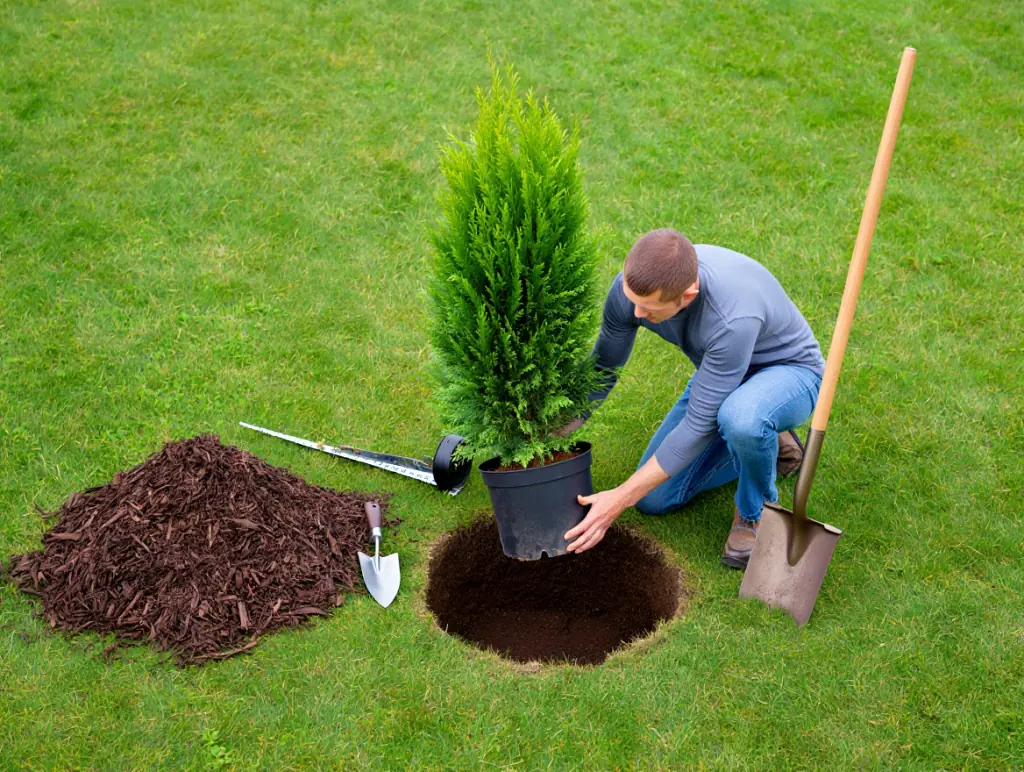
Seeing the planting process once makes it much easier to get the depth and spacing right. This step-by-step walkthrough shows how to lay out a straight row and set each arborvitae at a proper planting height. Use it as a visual checklist before you dig your first hole.
Watering and Fertilization
Hydration is the lifeblood of the Emerald Green Arborvitae. Because they have shallow, fibrous root systems, the species cannot tap into deep groundwater tables like oak trees can.
Watering Schedule for New Plantings
Proper hydration is the #1 factor in preventing transplant shock.
- First 30 Days: Water daily. Apply 1–2 gallons of water per foot of tree height via a slow trickle or drip hose.
- Months 2–6: Reduce frequency to twice a week, maintaining a deep soak to encourage deep root growth.
- Established (1+ Years): Water weekly during hot summer months.
- Winter Prep (Crucial): Continue watering weekly in late autumn until the first hard ground freeze. This prevents winter desiccation (browning).
Winter Watering Importance
Many people pack up their hoses in September. This is a mistake. You must irrigate your landscape until the ground freezes solid. The Emerald Green Arborvitae loses moisture through its needles all winter; if the roots are dry going into the freeze, the foliage will desiccate and turn brown.
Pruning and Maintenance Tips
One of the best features of the Emerald Green Arborvitae Smaragd is that it requires very little trimming. However, some maintenance ensures a sharper look.
- Single Leader: Ensure the plant has only one central vertical stem. If a second one develops, clip it back to prevent the conifer from splitting under snow load.
- Deadwood: Clean out the interior of the shrub. It is natural for the innermost needles to brown and drop (a process called flagging), but clearing them out improves air circulation.
Never prune back into the old, bare wood on an Emerald Green Arborvitae Smaragd. Unlike deciduous shrubs, these conifers possess few dormant buds in older branches; if you cut past the green foliage, that limb will never grow back, leaving a permanent hole.
Emerald Green Arborvitae Smaragd vs. Green Giant
When shopping for privacy trees, you will inevitably face a choice: the Emerald Green Arborvitae vs Green Giant. These are the two heavyweights of the hedge world, but they serve different purposes.
Comparative Growth Rates
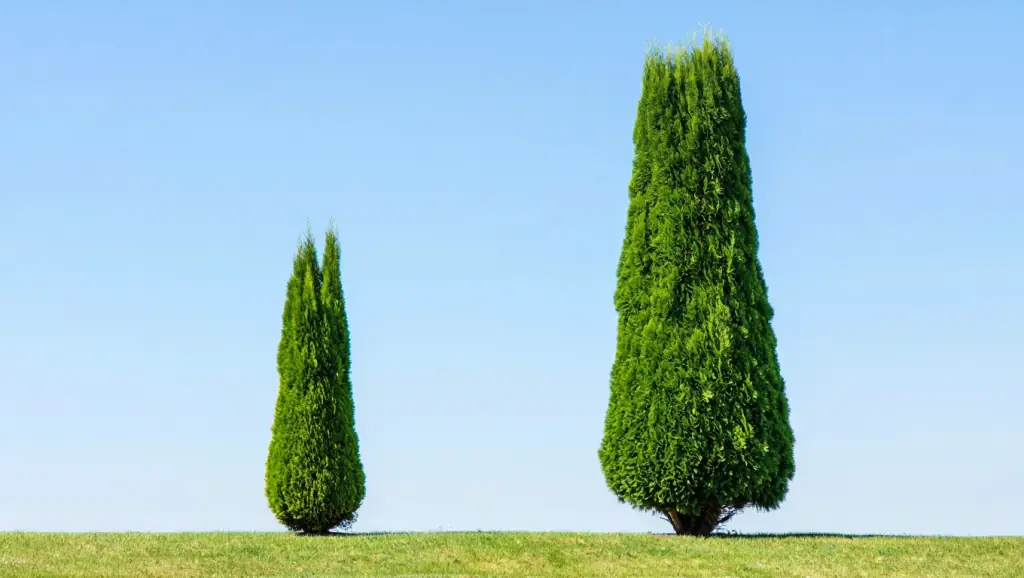
The difference here is stark. While the Emerald Green Arborvitae growth rate is a modest 6–12 inches per year, the Green Giant is a biological rocket ship, capable of expanding 3 to 4 feet in a single season.
If you need privacy yesterday, the larger cousin wins. However, if you want a low-maintenance fence that won’t require a ladder to trim every three months, the slower pace of the Smaragd is superior.
Differences in Appearance
When analyzing Emerald Green Arborvitae vs Green Giant, the aesthetic vibes are distinct.
| Feature | Emerald Green (‘Smaragd’) | Green Giant |
| Growth Rate | Slow (6–12 in/year) | Very Fast (3–4 ft/year) |
| Mature Height | 12–14 ft (Compact) | 40–60 ft (Massive) |
| Best Use | Small yards, tight property lines | Large estates, highway noise barriers |
| Deer Resistance | Low (Needs protection) | Moderate/High |
Choose Emerald Green for suburban lots where space is limited. Choose Green Giant only if you have significant acreage and need a fast, towering windbreak.
Best Uses for Each Variety
Choosing between Emerald Green Arborvitae vs Green Giant comes down to space.
- Choose Emerald Green if:
- You have a small yard or live in a dense subdivision.
- You want a formal, manicured look.
- You are planting near a patio or walkway.
- Emerald Green Arborvitae size restrictions are a concern.
- Choose Green Giant if:
- You have a large property or acreage.
- You need to block a view of a highway or a two-story building.
- You have a severe deer problem (Giants are slightly more deer-resistant).
Bert Cregg warns: “Columnar arborvitaes … are excellent for screens and living fences. However, they don’t stand up well to heavy snow or ice loads.” (2011, Michigan State University Extension).
When debating Emerald Green Arborvitae vs Green Giant, always measure your horizontal clearance first. A Green Giant planted three feet from a property line will eventually cross into your neighbor’s yard, leading to potential legal and relational disputes.
Common Issues and Solutions
Even the hardiest plants face challenges. Being proactive is key to keeping your Emerald Green Arborvitae healthy.
Pest and Disease Control
The most common enemies are spider mites and bagworms.
- Spider Mites: These tiny pests suck the sap from the needles, causing them to turn gray or yellow. You can often check for them by shaking a branch over a white piece of paper.
- Bagworms: Such insects look like small pinecones hanging from the tree. The larvae eat the foliage and can strip a specimen bare in weeks.
University of Kentucky Entomology recommends cutting and removing bagworm bags during winter to remove egg-filled bags and reduce spring infestations. (2022, University of Kentucky Entomology).
Weather and Environmental Challenges
Winter burn is a significant issue. This happens when the sun and wind dry out the foliage while the roots are frozen and cannot replenish the water.
Winter damage on arborvitae often comes from wet, heavy snow forcing branches outward. This quick video demonstrates a simple tying method that helps keep the leader and upper branches together. It’s especially useful for narrow, columnar cultivars planted as screens.
Troubleshooting Growth Problems
If you notice your Emerald Green Arborvitae growth rate stalling, check the soil drainage. Root rot, caused by heavy clay earth or overwatering, is a silent killer. Clay content over 40% (squeeze test: forms hard ball that won’t crumble) requires raised beds or 50/50 soil amendment—otherwise root rot hits 70% of trees within 24 months.
Diagnostic Checklist for Sick Trees
- Is the browning on the inside? (Likely normal shedding).
- Is the discoloration on the tips? (Likely winter burn or drought).
- Is the tree leaning? (Improper planting depth or root issues).
- Are there white patches? (Scale insects).
If your Emerald Green Arborvitae Smaragd is struggling, a soil test is your best friend. Adding organic compost can improve drainage in clay grounds and water retention in sandy plots.
Landscape Design Ideas
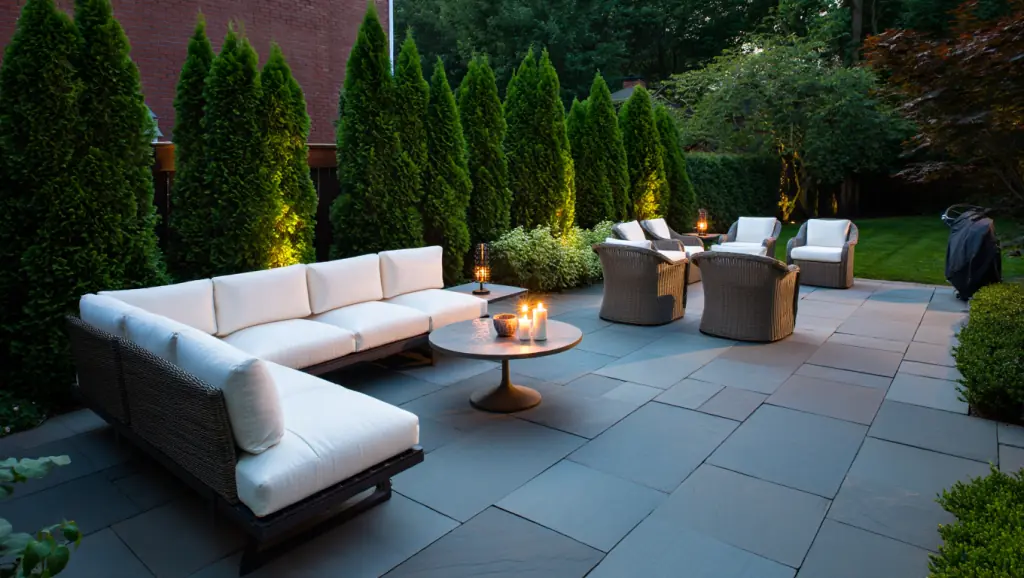
This tree is a designer’s favorite because it acts as “architectural foliage.” It provides structure similar to a column or a wall.
Using Emerald Green Arborvitae for Privacy
How far apart to plant Emerald Green Arborvitae for privacy? For a dense privacy screen, plant Emerald Green Arborvitae 2 to 3 feet apart (center-to-center).
- Instant Privacy: Spacing at 2 feet provides a quicker screen but increases root competition.
- Long-term Health: Spacing at 3 feet allows for better air circulation and reduces the risk of fungal diseases while eventually forming a solid hedge.
Note: Never plant closer than 2 feet, as overcrowding leads to interior browning and needle drop.
Incorporating into Garden Borders
The Emerald Green Arborvitae Smaragd works beautifully as a backdrop for flowering shrubs. The dark foliage makes the colors of hydrangeas, roses, or ornamental grasses pop.
When comparing Emerald Green Arborvitae vs Green Giant for borders, the Smaragd is the only logical choice. A Giant would swallow the flower bed whole.
Creative Uses in Landscaping
Don’t just think in straight lines.
- Spiral Topiary: The dense foliage can be trained into twists for a formal entrance.
- Clusters: Plant them in groups of three at the corners of your lot to anchor the landscape.
- Container Gardening: Because of the manageable Emerald Green Arborvitae height, they can live in large pots for several years on a deck or balcony.
In controlled experiments, participants who viewed restorative natural scenes recovered attention better than those who viewed nonrestorative scenes, supporting the idea that even brief visual exposure to greenery can help counter mental fatigue. (2005, Journal of Environmental Psychology—University of Padova).
The Anchor Effect
Using the Emerald Green Arborvitae size effectively involves “anchoring” the corners of your house. A tall vertical element at the edge softens the sharp angles of brick or siding.
FAQs About Emerald Green Arborvitae
How Fast Do They Grow?
The Emerald Green Arborvitae growth rate is generally 6 to 12 inches per year. While they aren’t the fastest developers, this manageable speed prevents them from becoming overgrown and reduces the need for frequent pruning compared to other hedge plants.
What is the Mature Size?
You can expect a mature Emerald Green Arborvitae height of 12 to 14 feet and a width of 3 to 4 feet. This specific Emerald Green Arborvitae size makes them ideal for privacy screens in small to medium-sized residential yards.
How to Care for Them in Winter?
To protect your Emerald Green Arborvitae Smaragd, water them deeply until the first hard freeze. In very windy areas, you might consider wrapping them in burlap for the first two years to prevent winter burn, although the species is generally hardy.
What is better: Emerald Green or Green Giant?
It depends on your space. When weighing the Emerald Green Arborvitae vs Green Giant, choose the Smaragd for tight spaces and low maintenance. Opt for the Giant if you have a large property and need a massive, fast-growing screen above 20 feet.
Can I Top the Tree to Control Height?
Technically yes, but it is not recommended. If the Emerald Green Arborvitae height gets too tall, you can trim the leader, but this will ruin the natural pyramidal shape and can encourage multiple stems to form, making the tree susceptible to snow damage.
Conclusion
The Emerald Green Arborvitae is more than just a common hedge; it is a functional investment in your property’s privacy and beauty. By choosing this cultivar, you are opting for a manageable Emerald Green Arborvitae size that respects your property lines while providing that lush, year-round screen we all desire. Whether you are planting a single specimen as a focal point or a row of fifty for a living fence, success comes down to preparation—proper spacing, adequate water, and patience with the Emerald Green Arborvitae growth rate.
Now that you are equipped with the knowledge of how to plant and care for the Emerald Green Arborvitae Smaragd, the next move is yours. Take a walk around your yard this weekend and mark out where these trees could solve a problem for you. Are you trying to block the view of a neighbor’s garage? Do you need a windbreak? Visualizing the Emerald Green Arborvitae height in your actual space is the first step toward a better landscape.
If you are ready to get your hands dirty, I have prepared a comprehensive maintenance checklist to help you track your watering and care schedule. This tool will ensure you don’t miss those critical irrigation windows in late autumn.

Which part of the planting process are you most worried about—the digging or the watering schedule? Let me know in the comments below!
Sources
- (2000, Northeastern Canada field trials) Évaluation de la tolérance du Thuja occidentalis L. et de huit de ses cultivars sous les conditions climatiques du nord-est du Canada.
- (2022, University of Kentucky Entomology) Dealing with Bagworms on Landscape Plants (ENTFACT-440).
- (2005, Journal of Environmental Psychology; University of Padova) Exposure to restorative environments helps restore attentional capacity.
- Bell, Neil (retired horticulturist, Oregon State University Extension Service). 2024. How to plant and care for arborvitae hedges in Oregon.
- Cregg, Bert (Michigan State University Extension; Departments of Horticulture and Forestry). 2011. Act now to manage snow damage on arborvitaes.