Firewood Rack Outdoor: The Ultimate Guide to Choosing and Building Your Own
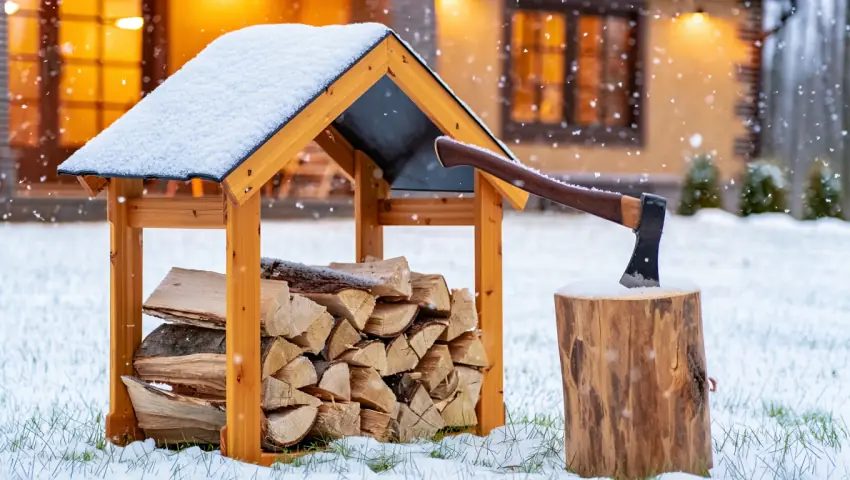
A firewood rack outdoor is an essential storage structure designed to elevate timber off the ground, promoting air circulation and reducing moisture content below 20%. By preventing ground contact, it protects fuel from rot, insects, and fungal decay, ensuring a cleaner burn and higher heat output. Many homeowners unknowingly sabotage their heating efficiency by leaving fuel on the damp ground, inviting rot and insects to destroy their investment. A proper firewood rack outdoor is not just a storage solution; it is an essential tool for seasoning timber and ensuring a clean, hot burn throughout the colder months. Without one, moisture wicks up from the soil, rendering even the best hardwoods useless.
This guide explores how to select, build, and maintain a structure that keeps fuel dry, accessible, and ready for the fireplace, ensuring you get the most heat for your effort. You can also download a comprehensive check-list at the end of this page to help you track your progress.
Understanding the Importance of a Firewood Rack Outdoor
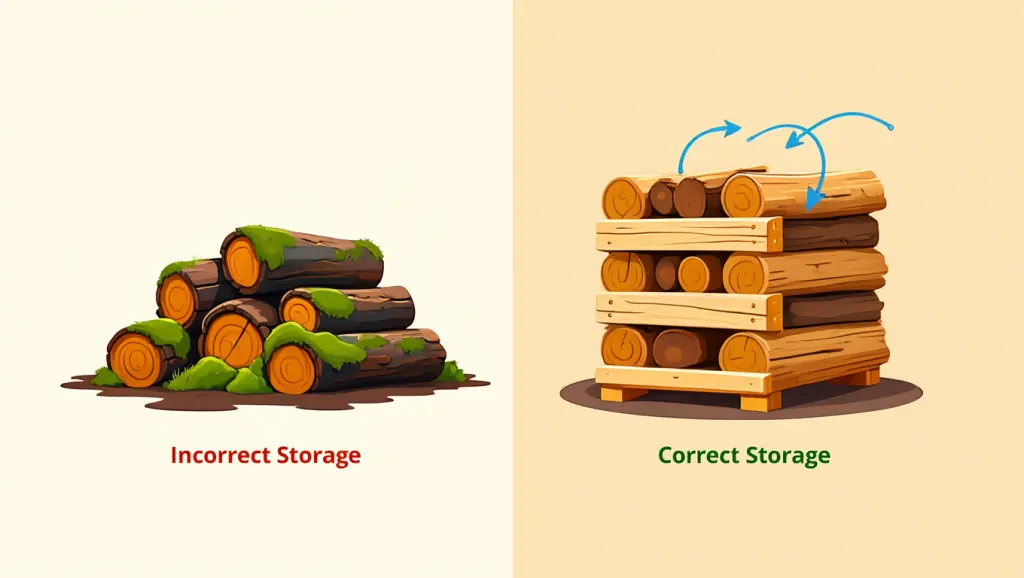
Stacking logs in a pile behind the garage may seem like the simplest storage method, but it creates a favorable environment for fungus and rot. Air circulation helps dry split logs stored outdoors, but once the moisture content drops below 25%, direct sunlight on the ends of the logs becomes equally important. This is especially true in humid climates, where wind alone is insufficient to draw the accumulated moisture out of dense hardwood.
Freshly cut hardwood typically runs 45–60% moisture straight from the saw—maple and birch hit 55–60%, while oak and ash sit closer to 48–52%. For effective burning, this value must drop below 20%. A special stand elevates the stack, allowing wind to pass through it and carry away evaporating moisture.
Benefits of Using a Firewood Rack Outdoor
The primary advantage of using a firewood rack outdoor is the acceleration of the drying process. When logs are stacked neatly off the ground, air circulates around all sides, drastically reducing the time it takes for green lumber to become season-ready. This results in hotter fires, less creosote buildup in the chimney, and significantly less smoke entering your home.
Beyond efficiency, organization plays a huge role. A proper structure creates a dedicated footprint for fuel, preventing the sprawl that often happens with loose piles. It allows homeowners to measure their inventory accurately. Knowing exactly how much fuel is on hand prevents the panic of running out in the middle of a February blizzard.
Protecting Your Firewood from the Elements
Ground contact is the enemy of preservation. Soil retains moisture long after the rain stops, and wood acts like a sponge, soaking that water up through capillary action.
Researchers at the USDA Forest Products Laboratory confirm that “decay resistance may be less for members placed in contact with the ground and/or used in warm, humid climates,” making elevation critical for long-term wood preservation (2021, Forest Products Laboratory).
Lifting the bottom rail at least 3 inches off soil breaks capillary action—if it’s under 2.5 inches, moisture still climbs 6–8 inches up through bark cracks within 48 hours of rain. Furthermore, a DIY firewood rack outdoor project often incorporates covers or overhangs. These additions shield the top layers from rain and snow while leaving the sides open for cross-ventilation. This balance is crucial; covering fuel completely with a tarp can actually trap moisture inside, causing mold to flourish.
Enhancing Your Outdoor Space with a Firewood Rack
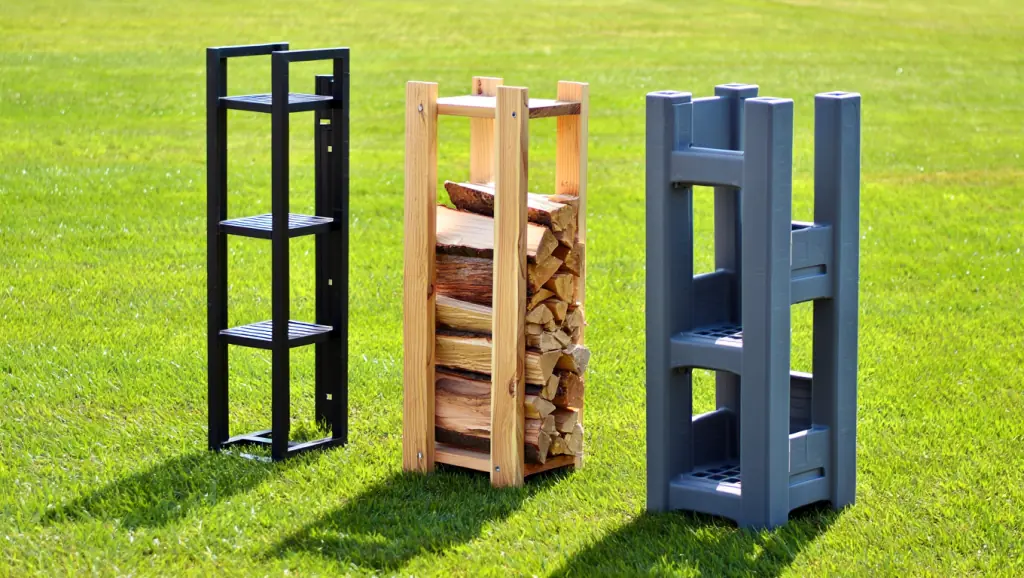
A sloppy pile of logs looks neglected and can lower the visual appeal of a backyard or patio. Conversely, a well-built framework turns a fuel source into a rustic design element. Metal stands with sleek lines fit modern homes, while sturdy timber frames complement traditional aesthetics.
A tall, narrow firewood rack outdoor utilizes vertical real estate, clearing up the deck for furniture or a grill. It signals that the homeowner cares about maintenance and order, transforming a utility area into a tidy feature of the landscape.
Choosing the Right Firewood Rack Outdoor for Your Needs
Selecting the correct storage solution requires an honest assessment of how much fuel is burned annually and where it will be stored. A casual burner who lights a hearth once a week needs a different setup than someone heating their entire home with a wood stove. The market offers a variety of materials and designs, but functionality should always trump aesthetics.
Materials: Metal vs. Wood vs. Plastic
The durability of any storage unit depends heavily on what it is made of. Each material has distinct pros and cons regarding longevity and maintenance.
| Material | Durability | Aesthetic Appeal | Maintenance Required | Cost |
| Tubular Steel | High (if powder-coated) | Modern, Minimalist | Low (check for rust) | Moderate |
| Pressure-Treated Lumber | Very High | Rustic, Natural | Moderate (sealing/staining) | Low to Moderate |
| Heavy-Duty Plastic | Moderate | Utilitarian | Very Low | Low |
| Wrought Iron | Extremely High | Classic, Decorative | Low (painting occasionally) | High |
Metal options are popular for their strength and ease of assembly, but cheap variants rust quickly. A DIY firewood rack outdoor made from lumber allows for custom sizing and blends with the landscape, though it requires occasional sealing to prevent weathering.
Your local climate determines material longevity more than aesthetics. Coastal or high-humidity regions accelerate corrosion in steel within 18 months unless powder-coated. In these zones, pressure-treated lumber with annual sealant outperforms metal. Conversely, arid climates (Southwest U.S.) allow untreated cedar to last 7+ years with minimal maintenance—moisture simply isn’t present to drive decay.
Size Considerations for Different Spaces
Sizing is often where people make mistakes. Fuel is measured in cords (128 cubic feet), but most suburban homeowners deal in “face cords” or partial cords. A standard face cord is 4 feet high and 8 feet long, with a depth of 16 inches.
If the goal is to store a weekend’s worth of logs near the back door, a small 4-foot stand is sufficient. For heating purposes, a larger unit capable of holding a full cord is necessary. Overloading a small DIY firewood rack with roof causes structural failure, so heeding weight limits is vital.
Visualizing cord measurements prevents costly sizing errors. Use this quick-reference table to match your heating needs to rack dimensions:
| Annual Usage | Recommended Rack Size | Holds Approx. | Best For |
|---|---|---|---|
| Weekend fires only | 4 ft L × 3 ft H × 16 in D | ¼ face cord | Decorative patio storage |
| Supplemental heating | 8 ft L × 4 ft H × 16 in D | 1 face cord | 2–3 months of regular use |
| Primary heat source | 12 ft L × 4 ft H × 16 in D | 1.5 face cords | Whole-home heating Oct–Mar |
Note: Depth should never exceed 16–18 inches (one log length) to maintain airflow through the entire stack.
Design Features to Look For
When shopping or designing, look for elevated bases. The bottom rail should sit at least 2 to 4 inches off the ground. Another critical feature is adjustable feet, which allow the structure to sit level on uneven pavers or gravel.
“You can tell a lot about a person from his — or her — woodpile,” — Lars Mytting, writer and journalist and the best-selling author of Norwegian Wood: Chopping, Stacking and Drying Wood the Scandinavian Way.
Solid end supports are non-negotiable. They prevent the “avalanche” effect where logs tumble out from the sides. A simple DIY firewood rack with roof design often integrates these supports into the frame itself, providing superior rigidity compared to bolt-on metal hoops.
The most expensive rack is useless if it sits on a swamp; always prioritize placing your rack on a bed of gravel or concrete pavers to ensure drainage, regardless of the rack’s material quality.
DIY Firewood Rack Outdoor: How to Build Your Own
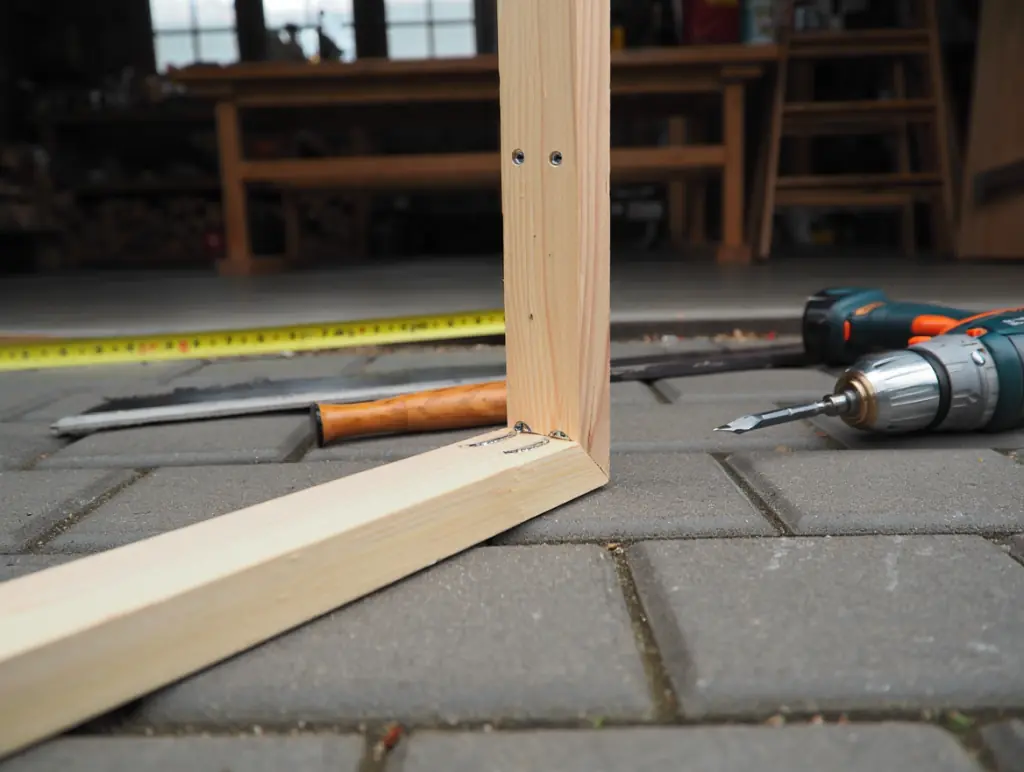
Building a storage unit offers the flexibility to fit specific dimensions that pre-made products cannot match. A DIY firewood rack outdoor project is also generally cheaper and sturdier than buying a tubular steel kit from a big-box store. This section outlines a robust, no-frills approach to construction.
Essential Tools and Materials
For a basic stand, heavy machinery is not required. A homeowner can typically complete this with standard garage tools.
Required Tools:
- Circular saw or miter saw.
- Power drill with screwdriver bits.
- Tape measure and speed square.
- Level.
- Safety glasses.
Materials List:
- (3) 2×4 pressure-treated lumber (8 feet long).
- (2) Cinder blocks (optional for base) or landscaping pavers.
- 2.5-inch exterior deck screws.
- Wood stain or sealant.
Step-by-Step Guide to a Simple DIY Firewood Rack
Follow this procedure to construct a sturdy 8×4 rack using pressure-treated lumber:
- Cut the Uprights: Using a circular saw, cut two 2x4s into four 4-foot lengths to serve as vertical supports.
- Assemble the Base Frame: Lay two 8-foot 2x4s parallel to each other, spaced 12 inches apart.
- Install Cross-Bracing: Screw short 2×4 scraps between the base boards every 24 inches to create a ladder-like frame.
- Attach Vertical Supports: Secure the 4-foot uprights to the outside of the base frame using three 2.5-inch deck screws per joint.
- Add Corner Braces: Install 45-degree angle braces at the bottom corners to prevent outward bowing under load.
- Level the Foundation: Place concrete pavers under the frame corners to prevent ground contact.
Tips for Stability and Durability
The lateral pressure exerted by a stack of oak or maple is immense. As the fuel settles, it pushes outward against the uprights. To counter this, using lag bolts instead of standard screws at the base joints adds significant strength.
Another tip is to never build the unit deeper than one log length. Deep storage limits airflow to the center pieces, creating a zone of moisture that never dries. A simple DIY firewood rack with roof works best when it is a single row deep.
Prefer to see the cuts and assembly before you start? This step-by-step walkthrough shows a straightforward 2×4 firewood rack build with common tools. Watch it once, then follow the cut list and bracing tips above.
DIY Firewood Rack with Roof: Added Protection for Your Wood
While a basic stand elevates the timber, precipitation is still a problem. Rain soaks the top layers, and snow melt drips down through the stack. Upgrading to a DIY firewood rack with roof solves this issue permanently. It ensures that the seasoning process continues even during a wet autumn.
Benefits of Adding a Roof
A roof acts as an umbrella, directing water away from the fuel. It also keeps the pile free of ice, making it safer and easier to collect logs during a freeze.
Field testing by the Cold Climate Housing Research Center compared common storage setups and found that uncovered firewood is “at risk of gaining moisture from rain,” while a woodshed-style stack (top-covered and elevated) helped keep winter moisture increases small compared with some tarp-covered or uncovered piles. (2011, Alaska)
This difference in moisture content is the difference between a fire that roars and one that smolders. A simple DIY firewood rack with roof also protects the frame of the stand itself, extending the life of the pressure-treated lumber.
Step-by-Step Guide to Building a Simple DIY Firewood Rack with Roof
Adding a cover to the basic design requires extending the uprights and creating a slope.
- Modify Uprights: Instead of cutting all uprights to 4 feet, cut the rear uprights to 50 inches and the front uprights to 46 inches. This creates a slope for water runoff.
- Frame the Top: Connect the tops of the front and rear uprights with 2x4s. Run cross-bracing between them to support the DIY firewood rack with roof structure.
- Install Purlins: Screw 1×3 strapping horizontally across the rafters, spaced about 12 inches apart.
- Attach Roofing: Screw a piece of corrugated metal or plastic panel into the purlins. Ensure it overhangs the front and back by at least 3 inches to prevent drip-back.
- Check for Leaks: Pour a cup of water on the cover to ensure it flows away from the storage area.
Choosing the Right Roofing Material
For a DIY firewood rack with roof, corrugated galvanized steel is the gold standard. It is lightweight, cheap, and lasts for decades. Asphalt shingles are heavy and require a plywood substrate, which adds unnecessary weight to the structure.
Polycarbonate panels are another option for a simple DIY firewood rack with roof. They allow sunlight to hit the top logs, potentially aiding in solar drying, though they can become brittle in extreme cold.
When cutting corrugated metal for your roof, always wear thick leather gloves and eye protection; the edges are razor-sharp and can cause serious injury faster than any power tool.
Enhancing Functionality: Accessories and Add-ons
Once the firewood rack outdoor is built, several accessories can improve the user experience. These additions make the daily chore of hauling fuel less physically taxing and cleaner.
Weather Covers and Tarps
If building a permanent cover isn’t an option, a canvas shield is the next best thing. However, one should never wrap the stack entirely in a blue tarp like a Christmas present. This traps ground moisture rising up, creating a greenhouse effect for mold.
Specialized DIY firewood rack outdoor covers often feature zippered fronts and mesh vents. These allow the timber to breathe while stopping direct rain. If using a standard tarp on a simple DIY firewood rack with roof, drape it over the top and only the top third of the sides. Secure it with bungee cords, leaving the bottom open for air intake.
Log Holders and Dividers
Most people burn different types of fuel: pine for starting fires (kindling) and oak or maple for long burns. A DIY firewood rack outdoor can be improved by adding a vertical divider in the middle. This separates the quick-burning softwoods from the dense hardwoods.
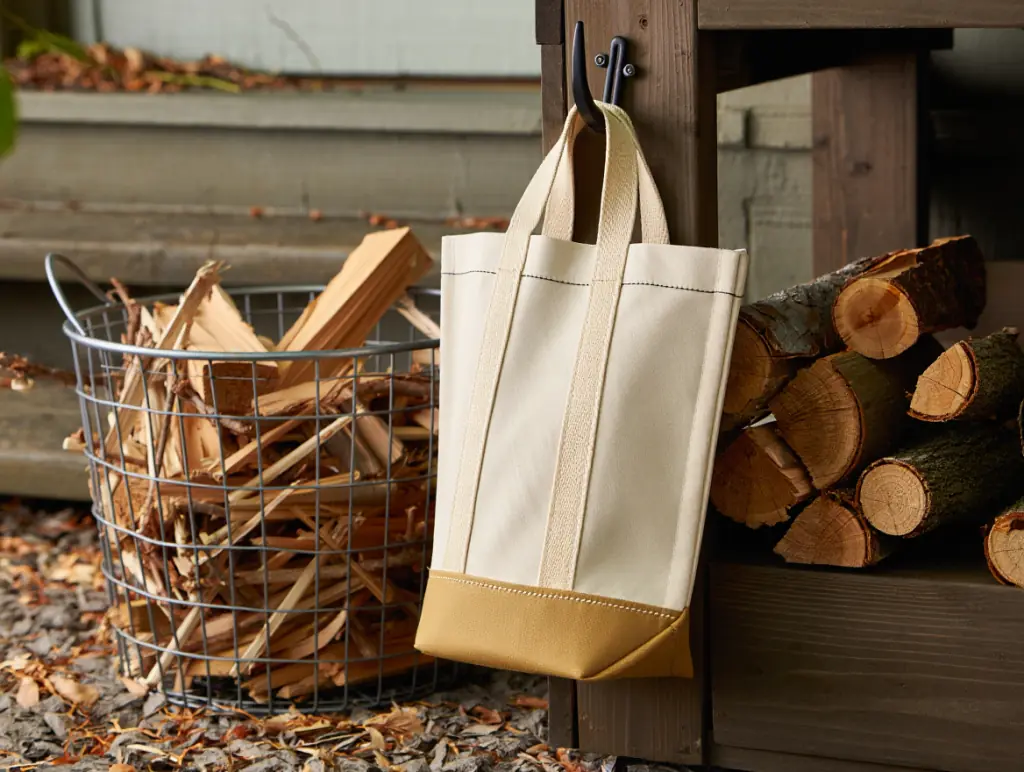
Small wire baskets attached to the side of the structure are excellent for holding kindling and fire starters. This keeps the messy debris off the patio and ensures dry starter material is always close at hand.
Incorporating Log Carriers
Hauling armfuls of timber ruins coats and tracks debris into the house. A canvas or leather log carrier is indispensable. Some DIY firewood rack with roof designs include hooks on the side specifically to hang the empty carrier.
The carrier should be loaded at the stand, brought inside, and emptied directly into the indoor hearth. This minimizes handling. A good system involves a firewood rack outdoor for bulk storage and a smaller, decorative stand inside for the daily supply.
Maintenance Tips for Your Firewood Rack Outdoor
Even a pressure-treated DIY firewood rack outdoor needs care to survive the seasons. Neglect leads to loose screws, graying lumber, and eventual structural failure.
Regular Cleaning and Inspection
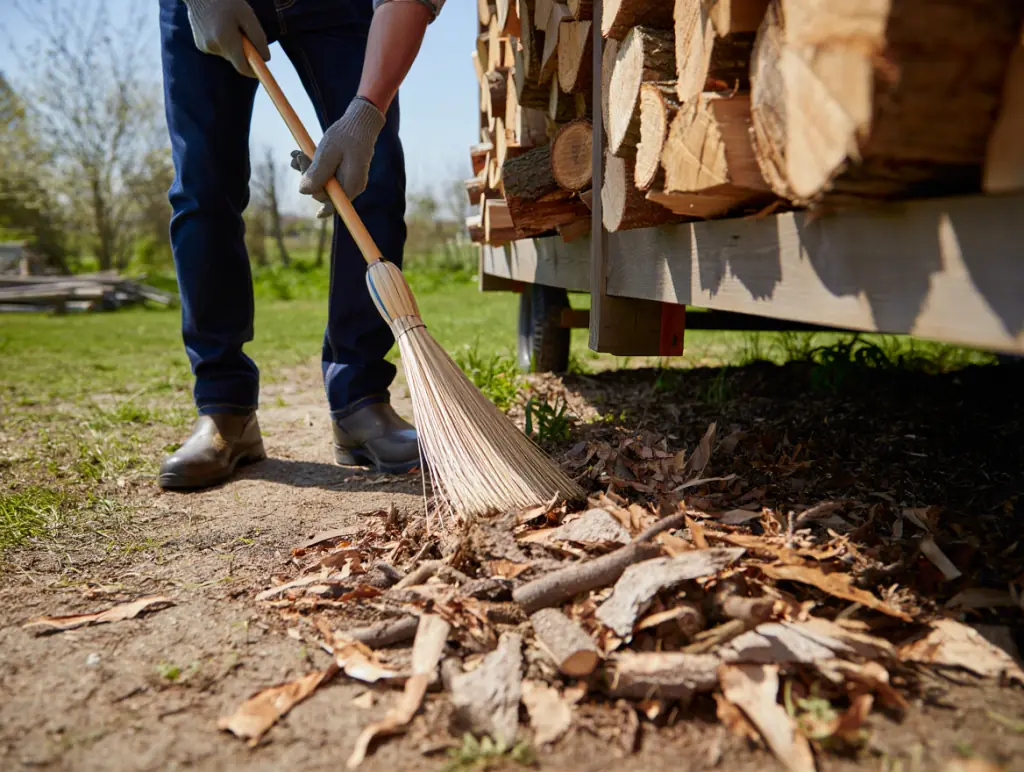
Every spring, once the fuel supply is depleted, the stand should be swept clean. Bark, sawdust, and organic debris accumulate at the bottom. This mulch retains water and accelerates rot at the base of the uprights. If you’re clearing out that soggy buildup anyway, consider repurposing the dry leftovers as pine mulch for landscaping around non-edible beds—just keep it away from the rack’s base so it doesn’t trap moisture where you need airflow most.
Use a stiff broom to scrub the slats. Inspect the screws or bolts. Wood shrinks and expands with temperature changes, often working fasteners loose. Tighten any wobbling joints on your simple DIY firewood rack with roof to ensure it is ready for the next load.
Preventing Rust and Decay
For metal stands, spot rust should be sanded down and sprayed with exterior enamel immediately. Once corrosion eats into the structural tubing, the unit is compromised.
For wooden structures, applying a water-repellent stain every two years keeps the lumber from cracking. Pay special attention to the cut ends of the boards, as this is where water enters the grain.
The USDA Forest Products Laboratory explains in the Wood Handbook (FPL–GTR–190), Chapter 4: “Moisture Relations and Physical Properties of Wood” that liquid water absorption is fastest “when the transverse section or end grain is exposed,” which is why sealing cut ends and keeping debris from holding water against the base can materially slow weathering and rot. (2010, Wisconsin)
This step is vital for any DIY firewood rack with roof exposed to harsh winters.
Seasonal Adjustments and Care
Do not stack new green timber on top of old dry logs. This is a common mistake. The moisture from the green fuel will drip down onto the seasoned ones, reversing the drying process you worked so hard to achieve with your firewood rack outdoor.
Rotate the stock. Move any leftover pieces from the simple DIY firewood rack with roof to a separate “burn first” pile before reloading with fresh inventory. This First-In-First-Out (FIFO) method ensures no log sits at the bottom for five years, turning into dust.
Where to Buy or Find Inspiration for Your Firewood Rack Outdoor
Not everyone has the time or desire to construct a DIY firewood rack with roof. Fortunately, there are plenty of retail options, as well as communities for finding design inspiration.
Top Retailers and Online Stores
For metal stands, Amazon and Wayfair offer extensive catalogs. Look for brands that specify “powder-coated” steel and heavy-gauge tubing. Uncoated steel racks in humid areas (>70% avg humidity) show surface rust within 6–9 months, and structural weakness appears by month 18 when weld points start flaking.
For high-end, aesthetic models, stores like L.L. Bean or specialized hearth retailers sell heavy wrought iron versions. These are expensive but often come with lifetime warranties. When buying, check reviews specifically for “rust” and “tipping” to ensure the firewood rack outdoor will last.
Exploring DIY Networks and Communities
If you decide to construct a simple DIY firewood rack with roof, platforms like Reddit (r/woodworking or r/DIY) and Pinterest are gold mines. Users often post their plans, mistakes, and modifications.
If you’re deciding between racks, sheds, and simple covers, this short explainer is a solid reference. It highlights practical ways to store firewood so it seasons faster and stays drier. Use it to sanity-check your placement, airflow, and covering choices.
Visiting Local Home Improvement Stores
Local lumber yards often have better quality timber than the big orange or blue box stores. The staff there can also offer advice on which local species resists rot best in your specific climate (e.g., Cedar vs. Redwood) for your DIY firewood rack with roof.
Never underestimate the “cull lumber” pile at your local hardware store; you can often find twisted or slightly imperfect boards for 70% off that are perfectly adequate for cutting into short bracing for your rack.
FAQ
How far should the firewood rack be from the house?
A firewood rack should be placed at least 30 feet from the home’s exterior structure. Storing firewood closer than 5 feet increases the risk of termites, carpenter ants, and rodents migrating into the foundation or siding.
What is the best orientation for a firewood rack?
Ideally, position the structure so the open side faces the prevailing wind to maximize airflow. However, try to orient a simple DIY firewood rack with roof so the back protects the fuel from driving rainstorms. South-facing exposure helps sun-dry the log ends.
Can I put a firewood rack on the grass?
No, placing it directly on grass is a bad idea. The weight will sink the legs into the soil, causing the unit to lean and eventually tip over. Furthermore, the grass underneath will die and rot, creating moisture that attacks your DIY firewood rack outdoor. Always use pavers, gravel, or concrete blocks as a foundation.
How long does it take for firewood to season in a rack?
Generally, it takes between 6 months to a year for green timber to season properly in a firewood rack outdoor. White oak split into 6-inch rounds needs 18–24 months to hit 20% moisture in humid zones (70%+ avg humidity), but red oak in dry climates (<50% humidity) seasons in 12–15 months. Splitting the logs into smaller pieces accelerates this process significantly.
Is it cheaper to build or buy a firewood rack?
Building posts longer than 6 feet is more cost-effective than buying them, as pressure-treated lumber costs less than $8 per linear foot. However, for smaller posts 3–4 feet long, kits from major hardware stores are often $15–25 cheaper, after accounting for scrap material and additional trips to the lumber yard. A basic pressure-treated 2×4 stand (8 ft long) costs approximately $65–85 in early 2026 for materials alone—still 40–60% cheaper than commercial metal racks of equivalent capacity
Conclusion
Managing a fuel supply does not have to be a battle against rot and gravity. Whether you choose to purchase a sleek metal unit or construct a DIY firewood rack with roof, the goal remains the same: keeping your inventory dry and your property organized. A proper firewood rack outdoor saves money by preserving the timber you bought or chopped, and it saves time by ensuring every log you grab is ready to burn.
Start by assessing your space and your heating needs. If you are handy, grab some pressure-treated 2x4s and build a simple DIY firewood rack with roof this weekend. If not, invest in a quality metal stand and place it on a solid foundation. The effort you put into storage now will be repaid a hundredfold on that first freezing night when the fire catches instantly.
To help you get started, we have prepared a downloadable resource. This guide includes a material shopping list, cut diagrams for the DIY project, and a seasonal maintenance calendar. Leave a comment below telling us what type of wood you burn most often, and we will reply with the link to the check-list!

Which tree species is the most popular for heating homes in your region—Oak, Maple, or something else? Share your local favorite in the comments below!
Sources
- (2021, USDA Forest Products Laboratory — Madison, WI) Wood Handbook (FPL–GTR–282), Chapter 14: “Biodeterioration of Wood”
- (2011, Cold Climate Housing Research Center — Fairbanks, AK) Wood Storage Best Practices in Fairbanks, Alaska: Final Report
- (2010, USDA Forest Products Laboratory — Madison, WI) Wood Handbook (FPL–GTR–190), Chapter 4: “Moisture Relations and Physical Properties of Wood”
- Mytting, 2016, Wisconsin Public Radio — Author Explains How Norwegians Can Measure A Man By His Woodpile