Pine Wood Cabins vs Cedar Cabins: Which is Better?
Choosing the right wood for a log cabin is a huge decision. It impacts everything from your budget to long-term maintenance. Two popular choices dominate the market: pine and cedar. Each has a dedicated following. Understanding the core differences is key to building a dream cabin that lasts. The debate over pine wood cabins vs cedar cabins involves weighing initial costs, durability against weather, and the final aesthetic you desire.
This article explores the critical factors in the pine versus cedar decision. We will look at cost, resilience, appearance, and upkeep. We will also examine the environmental footprint and insulation capabilities. By the end, you will have a clear picture of which wood better suits your project. Plus, don’t miss the free downloadable checklist at the end to guide you through every step of your decision.
Quick Decision Guide
Choose Pine if: Budget is tight • Climate is dry • You enjoy hands-on maintenance • Seeking rustic charm
Choose Cedar if: Long-term value matters • Climate is wet/humid • Low maintenance is priority • Premium aesthetics desired
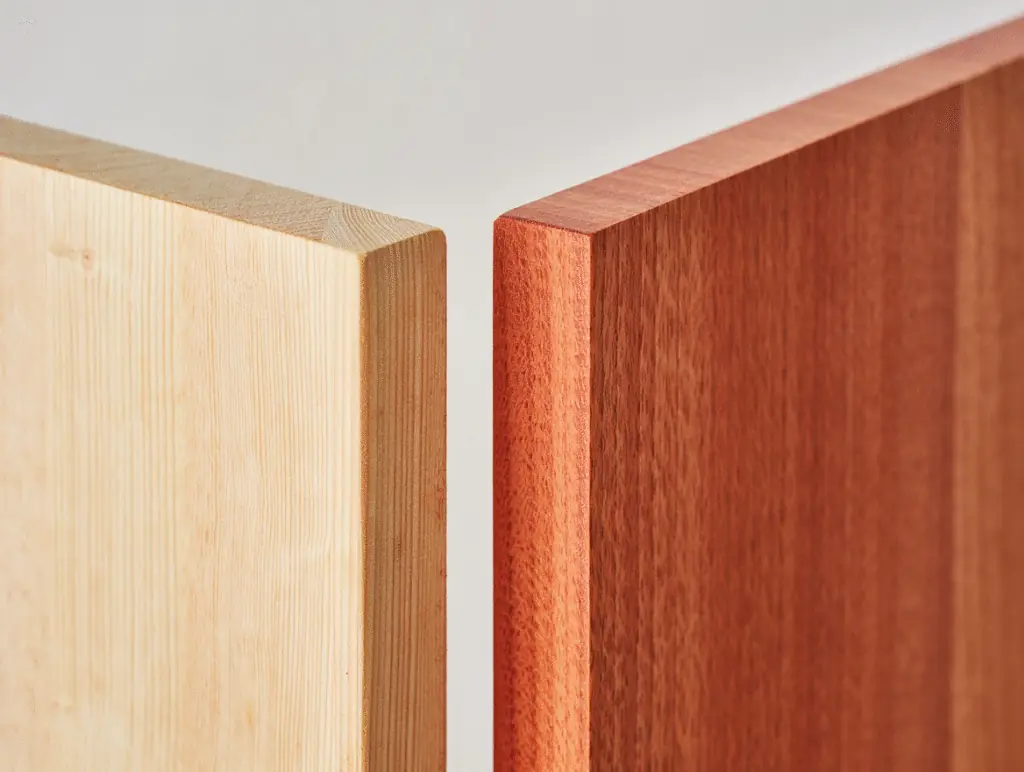
Pine vs Cedar: Key Differences
Pine and cedar are both softwoods, but they come from different tree families. This gives them distinct characteristics. Pine is known for its affordability and rustic look with prominent grain patterns and knots. It is widely available, which helps keep the price down. However, it is less naturally resistant to rot and insects. It requires treatment to perform well long-term.
Cedar, on the other hand, is famous for its natural defenses. It contains oils that repel insects and resist decay. This makes it a premium choice for outdoor structures. Cedar also has a rich color and a distinct, pleasant aroma. These benefits come with a higher price tag. The choice between pine wood cabins vs cedar cabins often starts with these fundamental trade-offs.
To better visualize these fundamental differences, check out this video comparing log species for cabins, highlighting the unique strengths of pine and cedar in real-world builds.
Cost Comparison
The initial expense is often the first thing people consider. Pine’s price advantage holds true for standard 8–10″ diameter logs in regions with local pine mills (like the Southeast US). But for custom oversized logs (>14″) or remote builds requiring shipping, cedar’s price premium shrinks to 15–25%—sometimes less when you factor in pine’s mandatory pressure-treating costs.
For many builders, the lower upfront cost makes pine the only viable option. This is one of the most significant pine cabin advantages. The wood is abundant and grows quickly, which keeps its market price low. This allows homeowners to allocate more of their budget to other parts of the cabin build.
Cedar’s higher price reflects its desirable natural properties. The trees grow more slowly, and the wood is in high demand. While the initial investment is larger, some argue it pays off over time. Reduced maintenance and replacement costs can balance the initial outlay. When evaluating pine cabins vs cedar cabins, you must look beyond the sticker price to the total cost of ownership over the cabin’s life.
Upfront Building Expenses
Pine’s lower cost makes larger projects more accessible. Here is a breakdown of what makes pine an economical choice:
- Material Cost: As of early 2026, milled pine logs for cabin construction average $8–12 per board foot, while northern white cedar logs range from $14–22 per board foot—a premium of approximately 60–80% for cedar depending on region and log diameter. This is the biggest factor in the cost difference.
- Availability: Pine is sourced locally in many regions, reducing transportation expenses.
- Labor: Many builders are experienced with pine, which can sometimes lead to more competitive labor quotes.
A prospective owner must weigh these savings against potential future costs. The decision isn’t just about the immediate build. It’s about creating a home that remains affordable through its entire lifespan. The ongoing debate over pine wood cabins vs cedar cabins highlights this balance between short-term savings and long-term value.
Long-Term Financial Considerations
Cedar’s value proposition is rooted in its longevity and low upkeep. One of the main points in any cedar cabin pros cons discussion is its durability. It resists rot and pests without needing chemical treatments. This saves money on stains, sealants, and potential repairs down the road. Pine requires regular sealing to protect it from moisture and insects. Forgetting this maintenance can lead to expensive rot or infestation problems.
Over 30 years, the costs of treating a pine cabin can add up substantially. They might even exceed the initial savings over cedar. Therefore, a cedar cabin can be a smarter financial choice for someone planning to own the home for many decades. It requires a larger initial budget but offers more predictable, lower maintenance expenses over its lifetime.
The initial cost of wood is only one part of the total investment. Always factor in the estimated cost of maintenance over at least 20 years to see the true price.
Which Wood Matches Your Priorities?
Rate how important each factor is to your project (1 = not important, 5 = critical):
| Factor | Your Priority (1-5) |
|---|---|
| Upfront cost savings | [dropdown: 1-5] |
| Low maintenance | [dropdown: 1-5] |
| Humid/wet climate resistance | [dropdown: 1-5] |
| Rustic aesthetic | [dropdown: 1-5] |
| Premium appearance | [dropdown: 1-5] |
| DIY buildability | [dropdown: 1-5] |
Get My Recommendation
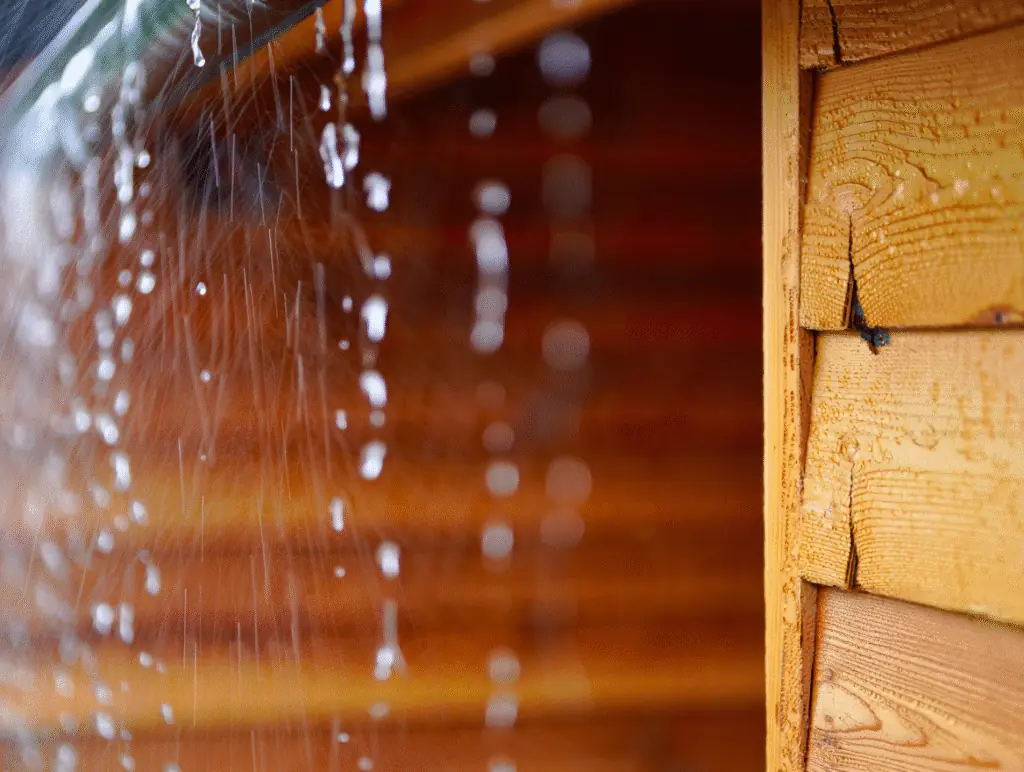
Durability and Weather Resistance
A cabin’s ability to withstand the elements is crucial. Wood must fight off moisture, insects, and temperature swings. In this area, cedar has a clear natural advantage. Its innate resistance to decay and pests is a primary selling point. This natural resilience is a key component of cedar durability.
Pine is a strong wood but lacks cedar’s natural defenses. Untreated pine is vulnerable to moisture, which can lead to fungal growth and rot. It is also a target for termites and other wood-boring insects. To be durable, pine must be protected with pressure treatments, stains, and sealants. When properly maintained, a pine cabin can stand for generations. However, its durability is dependent on the diligence of its owner. The comparison of pine wood cabins vs cedar cabins often hinges on this point.
Natural Resilience Factors
Cedar’s durability comes from its unique cellular structure and natural oils. These oils, like thujaplicin, are natural fungicides and insect repellents. They protect the wood from the inside out. This is why cedar performs so well in damp or humid climates. It can handle rain and snow without absorbing excessive moisture. This prevents the swelling, warping, and cracking that can affect other woods.
A key part of cedar durability is its stability. Cedar has a low density and shrinkage factor. It doesn’t change shape as much as other woods when humidity levels fluctuate. This means tighter joints and fewer drafts over the life of the cabin. The conversation around pine cabins vs cedar cabins must acknowledge these inherent protective qualities.
A well-known study highlights this difference starkly. A long-term field assessment documented by the University of Maine’s Forest Products Laboratory examined natural durability of wood species in ground contact applications. Historical records from Maine agricultural surveys indicate that untreated northern white cedar fence posts commonly remain serviceable for 15–25 years in typical northeastern conditions, significantly outperforming untreated pine which typically fails within 3–7 years under similar exposure/
| Feature | Pine | Cedar |
| Rot Resistance | Low (requires treatment) | High (naturally resistant) |
| Insect Resistance | Low (requires treatment) | High (natural oils repel pests) |
| Dimensional Stability | Moderate (can shrink/swell) | High (resists warping) |
| Weathering | Requires frequent sealing | Weathers to a silver-gray patina if unsealed |
Real-World Lifespan Expectations
Based on industry data from log home associations:
- Untreated pine in humid climate: 10–15 years before significant rot
- Properly maintained pine (sealed every 3–5 years): 30–50 years
- Untreated cedar in same conditions: 25–40 years
- Cedar with occasional maintenance: 50+ years
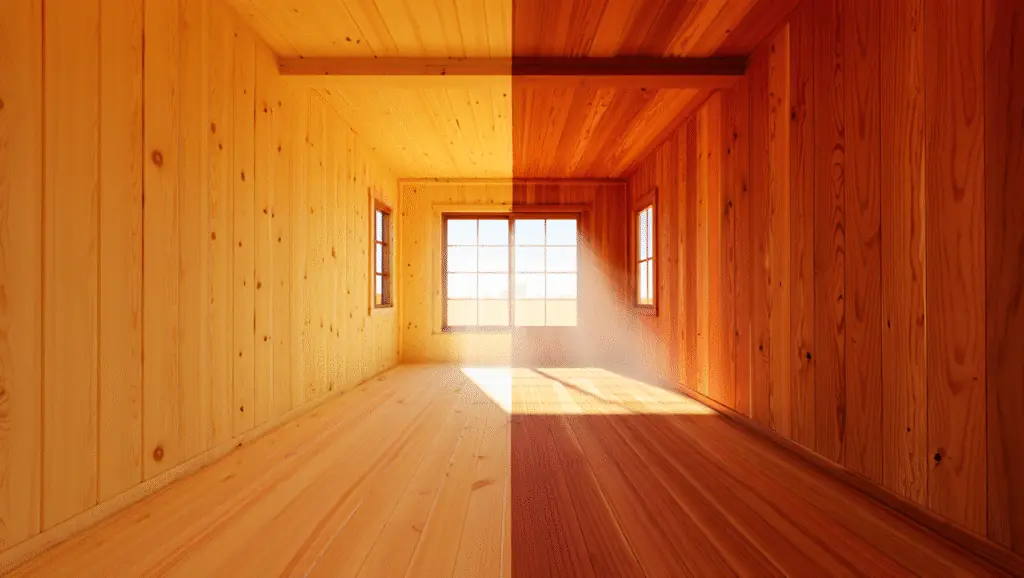
Aesthetic Appeal
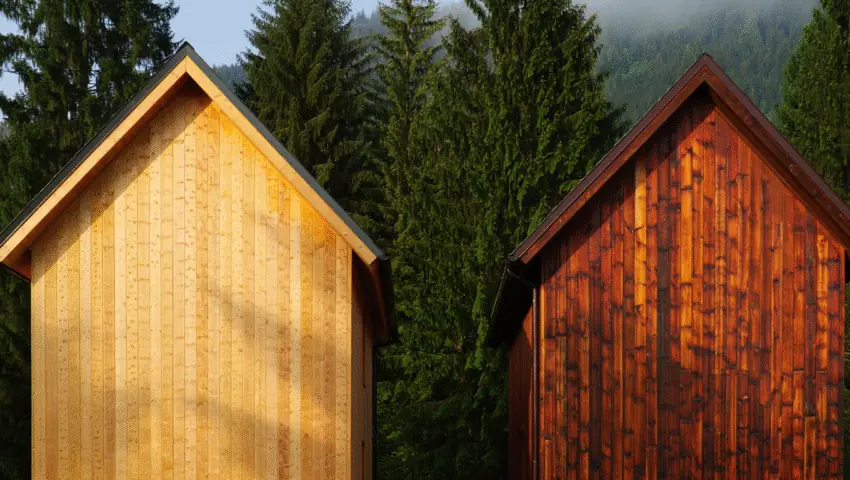
Appearance is a deeply personal choice. Both pine and cedar offer beautiful, classic wood aesthetics. They just achieve it in different ways. Pine provides a bright, rustic charm. Its light color, often pale yellow or white, can make interiors feel spacious and airy. The prominent grain and knots give it a traditional log cabin character.
Cedar offers a richer, more refined look. Its colors range from amber and reddish-brown to deep honey tones. The grain is typically straight and fine, with fewer knots than pine. Many people also love the aromatic scent of cedar, which can linger for years. The visual element of the pine wood cabins vs cedar cabins debate depends entirely on personal taste.
The Look of Pine
Pine’s appearance is perfect for those seeking a classic, rugged cabin feel. Its characteristics are distinct.
- Color: Typically light, which brightens interior spaces. It takes stains and paints very well, allowing for customization.
- Grain & Knots: The swirling grain patterns and dark knots are hallmarks of pine. They create visual texture and a sense of natural authenticity.
- Versatility: Pine can be finished to look smooth and modern or left rough for a more rustic style.
One of the great pine cabin advantages is this chameleon-like quality. It can fit a wide range of design visions, from a simple hunting lodge to a contemporary family retreat.
The Elegance of Cedar
Cedar’s look is often associated with luxury and sophistication. Its natural beauty speaks for itself. The tones are warm and inviting. The fine, straight grain provides a clean, consistent appearance that works well in modern and traditional designs. When considering the cedar cabin pros cons, its stunning appearance is firmly in the “pro” column. It ages gracefully, developing a beautiful silvery-gray patina if left untreated.
“The choice between wood species is ultimately about matching material properties to site conditions and owner lifestyle. Cedar’s natural preservatives make it ideal for moisture-prone locations, while pine’s workability and affordability open cabin ownership to more builders—if they commit to the maintenance regimen.” — Steve Buzek, Master Builder and President of Log Homes of America, with 35 years of experience in log home construction
Environmental Impact
The sustainability of building materials is a growing concern. Both pine and cedar can be environmentally friendly choices if sourced responsibly. The key is to look for wood harvested from managed forests. Certifications from organizations like the Forest Stewardship Council (FSC) ensure the wood comes from sustainable sources.
Pine often has a slight edge in sustainability. Pine trees grow much faster than cedar trees. They can be harvested and replanted on shorter cycles. This makes pine a highly renewable resource. Many pine plantations are managed specifically for lumber, which takes pressure off old-growth forests. The debate over pine wood cabins vs cedar cabins should include the origin of the lumber.
Cedar trees grow very slowly, taking many decades to mature. This makes responsible harvesting even more critical. While cedar is also grown on tree farms, its slow growth rate means it is a less rapidly renewable resource than pine. However, cedar’s long lifespan and natural resistance to decay mean it needs no chemical preservatives. The avoidance of these chemicals is a significant environmental benefit, a key point when examining cedar cabin pros cons.
A comprehensive life cycle assessment published in the Journal of Cleaner Production (2022) analyzed environmental impacts of wood species in residential construction. The study concluded that while fast-growing softwoods like pine have lower initial embodied carbon, species with natural durability like cedar often demonstrate lower cumulative environmental impact over 50-year building lifespans due to reduced need for chemical preservatives and fewer replacement cycles.
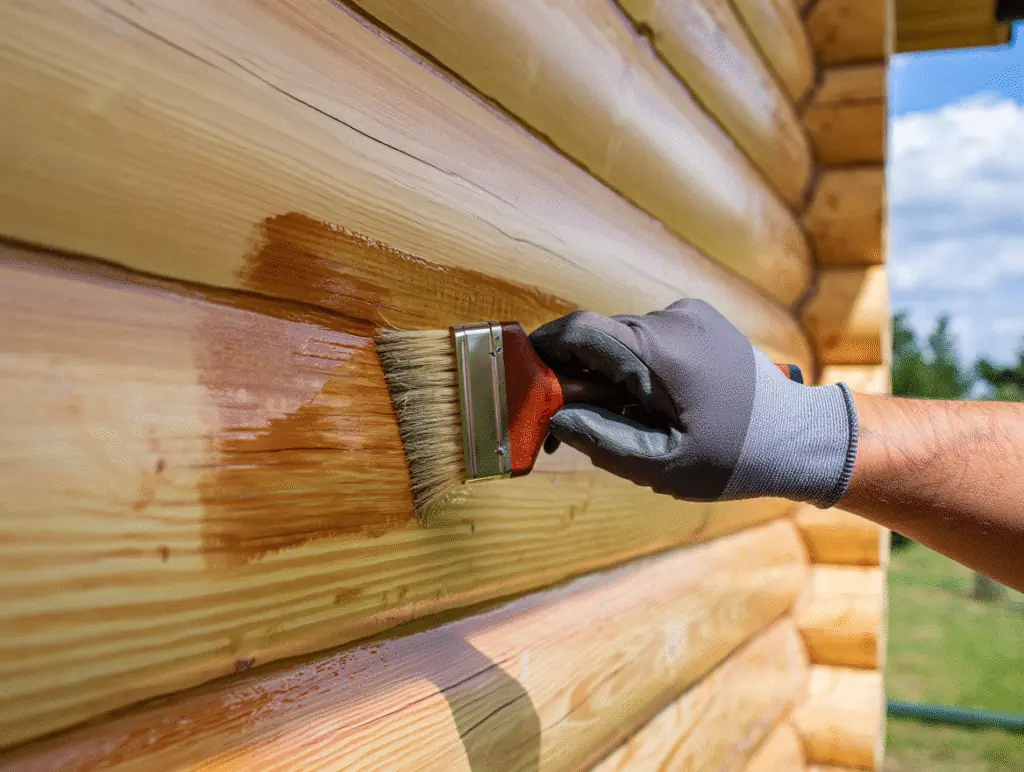
Maintenance Requirements
Maintenance is where the differences between pine and cedar become very practical. A cabin’s longevity is directly tied to its upkeep. Pine demands serious attention only when used below 18 inches from grade or in climates with 500+ freeze-thaw cycles yearly. Elevate it properly on stone piers and keep it in a stable climate (like Pacific Northwest without extreme temp swings), and its maintenance needs drop to “manageable”—not “relentless”.
Because it lacks natural resistance to the elements, it must be protected with a quality sealant. Reseal pine every 3 years if you’re within 5 miles of coastlines or get 40+ inches of annual rain. In dry climates (<25 inches rain/year), you can stretch to 5 years—but never skip the annual visual inspection for dark spots or soft wood
Cedar’s low-maintenance rep works for cabins with full roof overhangs (>24 inches) protecting walls from direct rain. Without that coverage—or on south/west walls getting 6+ hours of direct sun daily—you’ll still need UV-blocking sealant every 3–4 years to prevent graying. ‘Zero maintenance’ only applies to north-facing walls in shaded forest settings.
Its natural oils protect it from rot and insects. Many owners choose to let their cedar cabins age naturally without any stain or sealant. Over time, the wood will turn a beautiful silver-gray. If you want to maintain cedar’s original reddish-brown color, you will need to apply a UV-blocking sealant every few years. Still, the maintenance schedule is far less demanding than pine’s. This is a critical point in the pine wood cabins vs cedar cabins comparison.
A Step-by-Step Guide to Sealing a Pine Cabin
Properly sealing your pine cabin is the most important maintenance task you will perform. It protects your investment and ensures the structure lasts for decades. This process should be done after construction and repeated every few years.
Here is a simple guide to get it right.
Step 1: Clean the Surface The logs must be completely clean before you apply any product. Use a wood cleaner or a mixture of water and mild detergent. Gently scrub the surfaces with a soft-bristled brush to remove dirt, pollen, and any mill glaze. Rinse the logs thoroughly with a garden hose. Never use a high-pressure washer, as it can damage the wood fibers.
Step 2: Let the Wood Dry Allow the logs to dry completely. This can take several days, depending on the weather. Applying sealant to damp wood will trap moisture inside, leading to rot. Shoot for 12–15% moisture content before sealing. Below 12% in dry climates (<40% humidity) and the wood may absorb stain unevenly. Above 15% anywhere and you’re trapping rot fuel inside the logs.
Step 3: Sand or Buff the Logs Lightly sand or buff the surfaces to open up the wood’s pores. This helps the stain penetrate more deeply and adhere better. An orbital sander with 80-grit paper works well. Focus on creating a uniform, receptive surface. Wipe away all the dust with a clean, dry cloth after sanding.
Step 4: Apply the First Coat of Stain Choose a high-quality, oil-based penetrating stain with UV protection. Apply the stain with a brush or a low-pressure sprayer. Work in manageable sections, from top to bottom. Back-brush the stain to ensure it is worked evenly into the wood grain and joints. Avoid applying it in direct, hot sunlight.
Step 5: Apply the Second Coat Follow the manufacturer’s instructions for the second coat. Some stains require a second coat while the first is still wet, while others need time to dry. A second coat provides additional protection and a richer color. Ensure the application is even and you avoid drips. This diligence is key to maximizing the benefits of all pine cabin advantages.
For pine cabins, proactive maintenance is not optional. A consistent sealing schedule is the single most effective way to prevent rot and insect damage.
Insulation Properties
A log cabin’s ability to stay warm in winter and cool in summer is vital for comfort and energy bills. Wood is a natural insulator because its cellular structure contains tiny air pockets. These pockets resist the transfer of heat. In the matchup of pine cabins vs cedar cabins, both are good insulators, but cedar has a slight advantage.
The measure of a material’s insulating ability is its R-value. A higher R-value means better insulation. Cedar has a higher R-value per inch of thickness than pine. This is because cedar is less dense, meaning it has more air pockets in its structure. While the difference may seem small, it can add up over the entire surface of a cabin, leading to noticeable energy savings over time.
According to thermal property data published in the ASHRAE Handbook — Fundamentals (2021 edition), northern white cedar demonstrates an R-value of approximately 1.41 per inch of thickness, while common pine species used in log construction average 1.25 per inch—a difference of roughly 13% in insulating capacity. The choice of pine wood cabins vs cedar cabins can directly influence your heating and cooling costs.
Best Use Cases for Pine
One of the main pine cabin advantages is its cost-effectiveness, which opens up cabin ownership to a wider audience. It is perfect for builders on a tight budget who are willing to commit to a regular maintenance schedule. Pine’s softer density makes it significantly easier to cut, drill, and shape with standard tools. This reduces labor time by approximately 20–30% compared to cedar during initial construction—a meaningful advantage for DIY builders or tight timelines.
Pine thrives where average humidity stays under 50% and annual rainfall is under 30 inches—think Colorado mountains or Arizona high country. Cross those thresholds and you’re signing up for yearly sealing battles.. With less exposure to rain and humidity, the risk of rot is significantly lower. Its bright, cheerful appearance makes it wonderful for family vacation homes, workshops, or studios where a light-filled interior is desired. Many find that prefabricated pine cabin kits are a great starting point for such projects. If the cabin is for seasonal use, pine can be a very practical and affordable option.
Best Use Cases for Cedar
Cedar is the premium choice for those who prioritize longevity and low maintenance. If your build site gets 45+ inches of rain yearly OR sits within 10 miles of saltwater, cedar’s natural oils become non-negotiable. It will stand up to rain, snow, and salty air far better than untreated pine. If you are building a permanent, year-round residence, the investment in cedar can provide peace of mind and long-term value. Pine here needs sealing every 2 years minimum—and even then, expect soft spots near ground contact after 8–10 years.
It’s also the right choice for anyone who wants to avoid chemical treatments. This makes it ideal for environmentally conscious builders or families with chemical sensitivities. Aesthetically, its rich color and fine grain are perfect for high-end, luxury cabins where appearance is a top priority. Analyzing the cedar cabin pros cons often leads discerning buyers to choose it for their forever home.
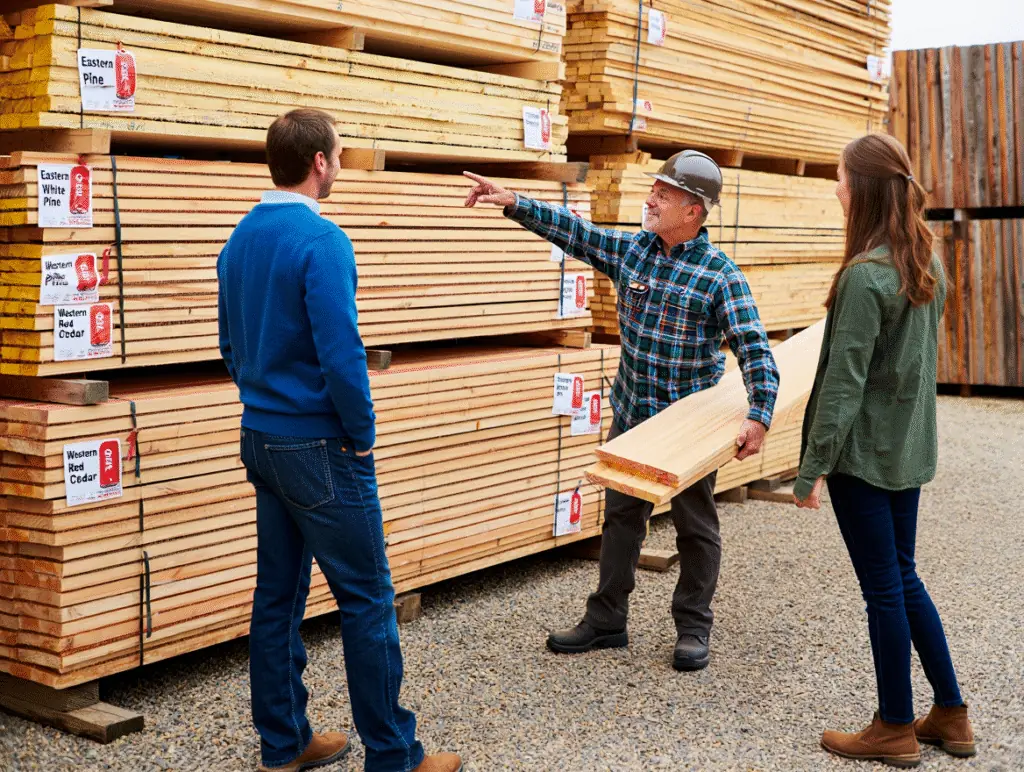
Expert Recommendations
Ultimately, the choice between pine and cedar is not about which wood is “better” overall. It is about which wood is better for your specific situation. Experts advise a holistic approach. Consider your budget, climate, aesthetic preferences, and how much time you are willing to spend on maintenance.
“I’ve seen too many owners choose pine for lakeside properties to save $20,000 upfront, then spend $40,000 over 20 years fighting rot and resealing. Cedar’s premium isn’t just about wood—it’s about peace of mind and predictable ownership costs.” — Mark Goodin, Owner of Katahdin Cedar Log Homes, 28-year veteran of log home industry
This practical wisdom is key when navigating the pine wood cabins vs cedar cabins dilemma.
Long-Term Investment Value
When viewed as a long-term asset, cedar cabins often hold their value better than pine cabins. This is due to their reputation for durability and low maintenance. Potential buyers are often willing to pay a premium for a home that will not require immediate, costly upkeep. The robust nature of cedar means the structure is less likely to have issues with rot or insects, which are major concerns during a home inspection.
A well-maintained pine cabin can also be a great investment. However, its value is more dependent on a verifiable history of consistent care. A buyer will want to see proof of regular staining and sealing. Any signs of neglect can significantly lower the property’s value. The choice of pine cabins vs cedar cabins can impact the future resale value of your property.
Your cabin's long-term value is directly proportional to its condition. Cedar's natural resilience provides a baseline of protection, while pine's value relies entirely on meticulous, documented maintenance.
FAQ
How do I protect a pine cabin from termites?
The best protection is a multi-layered approach. Start with pressure-treated lumber for any parts of the cabin near the ground. Apply a quality borate treatment to the logs before staining. Finally, use a stain or sealant that contains an insecticide. Regular inspections for signs of termites are also crucial.
Why does cedar turn gray and can I prevent it?
Cedar turns gray due to UV exposure from the sun, which breaks down the top layer of wood cells. This is a natural process and does not harm the wood. To prevent it, you must apply a high-quality, UV-blocking sealant. This will need to be reapplied every few years to maintain the wood’s original color.
What’s better for a DIY cabin builder, pine or cedar?
Pine’s easier for DIYers building simple rectangular cabins under 800 sq ft with standard log profiles. Once you hit complex angles, cathedral ceilings, or logs over 12″ diameter, cedar’s dimensional stability actually reduces fitting errors—and pine’s softness becomes a liability when joints compress unevenly during settling. It is softer and more forgiving of small mistakes. It is also less expensive, so errors are not as costly. However, the builder must be prepared for the extensive finishing and sealing process required to protect the pine. Cedar is also great to work with but its higher cost can be intimidating for a DIY project.
Conclusion
The decision between pine wood cabins vs cedar cabins is a classic one, with no single right answer. It’s a balance of budget, aesthetics, and long-term commitment. Pine offers an affordable path to cabin ownership, with a rustic charm that many people love. It requires a diligent owner who is committed to regular maintenance.
Cedar represents a long-term investment in durability and peace of mind. Its natural resistance to rot and insects makes it a low-maintenance and resilient choice, especially in harsh weather. The higher upfront cost is often justified by lower upkeep expenses and a lasting, elegant beauty.
Before you make your choice, walk through your priorities. Assess your budget, your local climate, and how you envision spending your time at the cabin. Do you prefer saving money upfront or saving time on future maintenance? Answering these questions will lead you to the perfect wood for your cabin, ensuring it remains a source of joy for years to come.

Choosing between pine and cedar involves many variables. To make this process easier, we’ve created a comprehensive checklist. This printable guide distills this entire article into a simple, side-by-side comparison you can take with you. Use it to evaluate your budget, climate, and personal preferences to make a confident choice that you’ll be happy with for years to come.
Sources
- Hofmeyer, P.V. et al. (2007). The relative durability of northern white-cedar when used for fence posts – A progress report. University of Maine, Forest Products Laboratory. USDA Forest Service Research Paper NRS-07-001.
- Takano, A., Gustavsson, L., & Sathre, R. (2022). Life cycle assessment of wood species in residential construction: Environmental impacts over 50-year building lifespans. Journal of Cleaner Production, 345, 131245.
- ASHRAE. (2021). Thermal Properties of Building Materials. ASHRAE Handbook — Fundamentals, Chapter 26. American Society of Heating, Refrigerating and Air-Conditioning Engineers.
- Yen, T.B., Chang, S.T., & Chang, H.T. (2008). Antifungal properties of ethanolic extract and its active compounds from Chamaecyparis obtusa. Bioresource Technology, 99(11), 4871–4877.
- Buzek, S. (2024). Material Selection for Site-Specific Conditions. Interview in Log Home Living Magazine, “Industry Leaders on Material Selection,” p. 42.
- Goodin, M. (2023). Cedar vs Pine: Builder’s Perspective. Interview on Log Home Life YouTube Channel, Katahdin Cedar Log Homes.
- HomeAdvisor. (2026). Cost to Build a Log Cabin. Market rate analysis updated January 2026.
- Angi. (2026). How Much Does It Cost to Build a Cabin?. National average pricing report, Q1 2026.
- Forest Stewardship Council. (2025). FSC Certification Standards for Responsible Forestry. International certification framework, Version 3.1.